
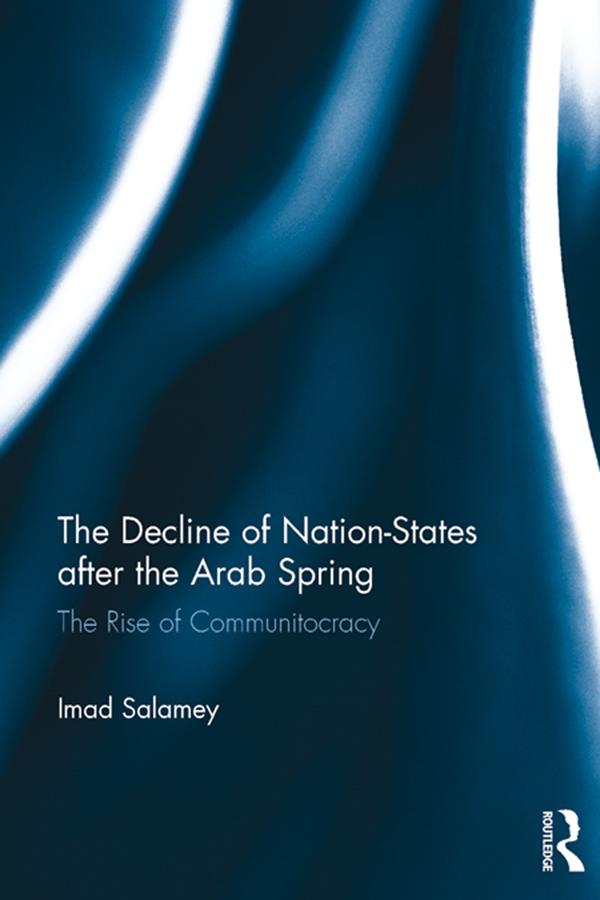
Surveying the causes of the Arab Spring, and revealing the governing trends arising from it, this book examines various international relation theories through the lens of the experiences of the countries in the Middle East and North Africa region. It takes the events of the Arab Spring as an outcome of globalization’s double movement whose integrative cultural, political and security frameworks devastated nationally controlled economies, undermining the nation-state system and propagating a decentralized and communitarian-based governance structure. The consequences for many plural, diverse societies were two-fold: autocratic nationalism was discarded while decentralized regimes representing communitarian-based politics came to the fore. The author reveals how the formulation of a new communitocratic order rests on the accommodation of this newly emerging communitarianism and explores the major drivers of political transformation, describing the emerging communities, forecasting their governing options and the possible repercussions for the post-Arab Spring states.
Paga fácilmente con tarjeta, Klarna, Apple Pay o Google Pay. ¿No estás contento? Siempre tienes 14 días de garantía de devolución. Lee más en nuestros términos. Si tienes preguntas, escríbenos a hello@memmo.org.
Memmo hace que estudiar sea más fácil, estés donde estés. Aquí tienes tus libros de texto y herramientas de estudio inteligentes en un solo lugar: resúmenes, quizzes, podcasts y flashcards. Y también a Ted, tu compañero de estudio que responde a todo lo que te preguntes. Más de 50 000 estudiantes ya estudian aquí. Está hecho para que aprendas más rápido y te estreses menos.