
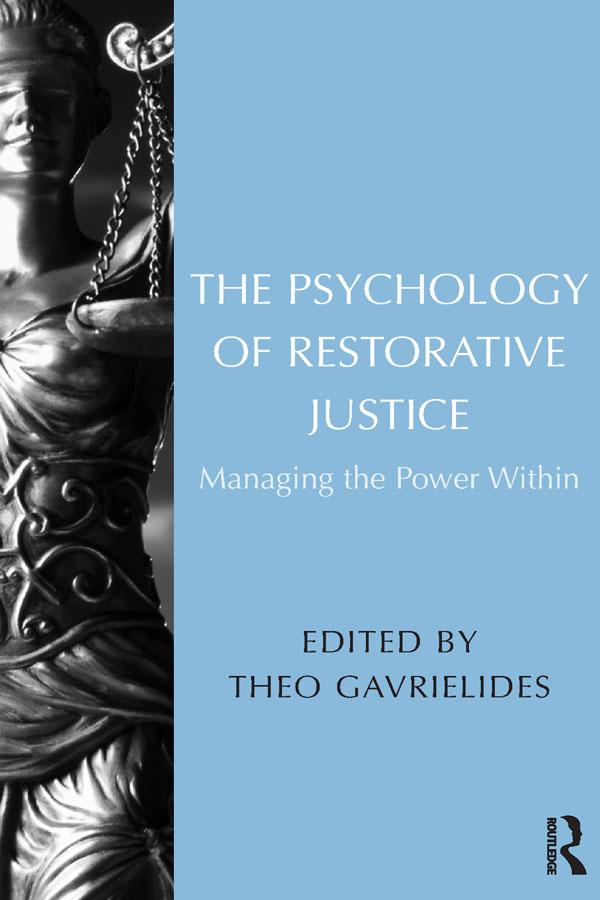
This ground-breaking collection dares to take the next step in the advancement of an autonomous, inter-disciplinary restorative justice field of study. It brings together criminology, social psychology, legal theory, neuroscience, affect-script psychology, sociology, forensic mental health, political sciences, psychology and positive psychology to articulate for the first time a psychological concept of restorative justice. To this end, the book studies the power structures of the restorative justice movement, the very psychology, motivations and emotions of the practitioners who implement it as well as the drivers of its theoreticians and researchers. Furthermore, it examines the strengths and weakness of our own societies and the communities that are called to participate as parties in restorative justice. Their own biases, hunger for power and control, fears and hopes are investigated. The psychology and dynamics between those it aims to reach as well as those who are funding it, including policy makers and politicians, are looked into. All these questions lead to creating an understanding of the psychology of restorative justice. The book is essential reading for academics, researchers, policymakers, practitioners and campaigners.
Paga fácilmente con tarjeta, Klarna, Apple Pay o Google Pay. ¿No estás contento? Siempre tienes 14 días de garantía de devolución. Lee más en nuestros términos. Si tienes preguntas, escríbenos a hello@memmo.org.
Memmo hace que estudiar sea más fácil, estés donde estés. Aquí tienes tus libros de texto y herramientas de estudio inteligentes en un solo lugar: resúmenes, quizzes, podcasts y flashcards. Y también a Ted, tu compañero de estudio que responde a todo lo que te preguntes. Más de 50 000 estudiantes ya estudian aquí. Está hecho para que aprendas más rápido y te estreses menos.
También te podría gustar
Comprar el libro0