
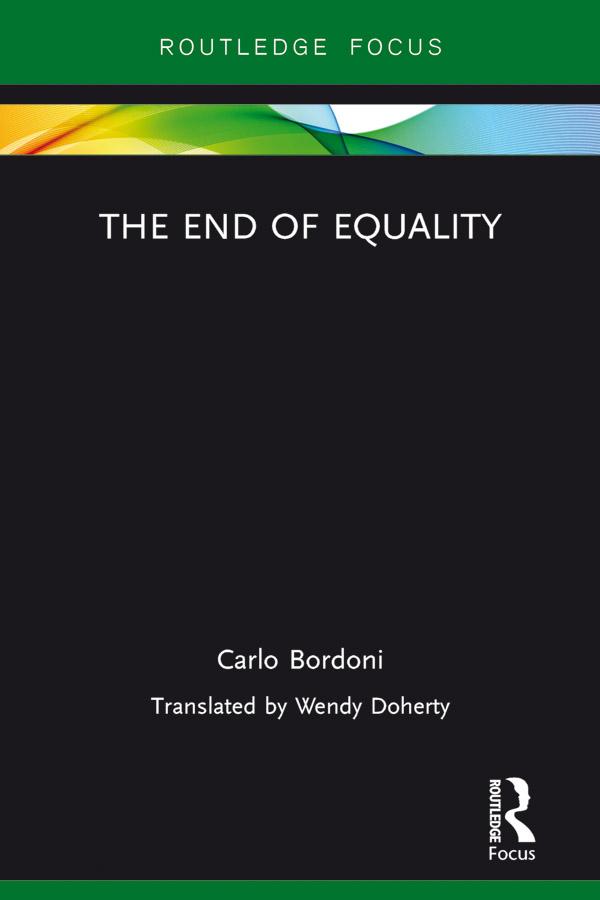
The economic crisis has brought social differences to the fore, reinventing the old question of inequality as democracy’s missed opportunity. Many have attempted to find a rational explanation of the problem, tracing it back to poor economic policy and reckless liberalisation of finance, or the crisis of banks and governments, as well as the collapse of family relationships. At the same time, globalisation has reduced the differences between some nations, bringing emerging countries to the level of the more advanced, but has dangerously increased internal inequalities. In this book, the author examines the question of inequality and the social problems it is creating in societies across the world, arguing that with the crisis of modernity, the ideal of equality appears to be over. As more and more of the world’s resources are concentrated in ever fewer hands, the promise of mass society as a means to grant equality and cancel the differences of classes appears to be giving way to a rising individualism. This book asks whether the apparent end of mass society will coincide with the end of equality and a re-evaluation of the worth of the individual. Are we heading towards a liquid world in which being equal is now considered less a virtue than a weakness?
Paga fácilmente con tarjeta, Klarna, Apple Pay o Google Pay. ¿No estás contento? Siempre tienes 14 días de garantía de devolución. Lee más en nuestros términos. Si tienes preguntas, escríbenos a hello@memmo.org.
Memmo hace que estudiar sea más fácil, estés donde estés. Aquí tienes tus libros de texto y herramientas de estudio inteligentes en un solo lugar: resúmenes, quizzes, podcasts y flashcards. Y también a Ted, tu compañero de estudio que responde a todo lo que te preguntes. Más de 50 000 estudiantes ya estudian aquí. Está hecho para que aprendas más rápido y te estreses menos.