
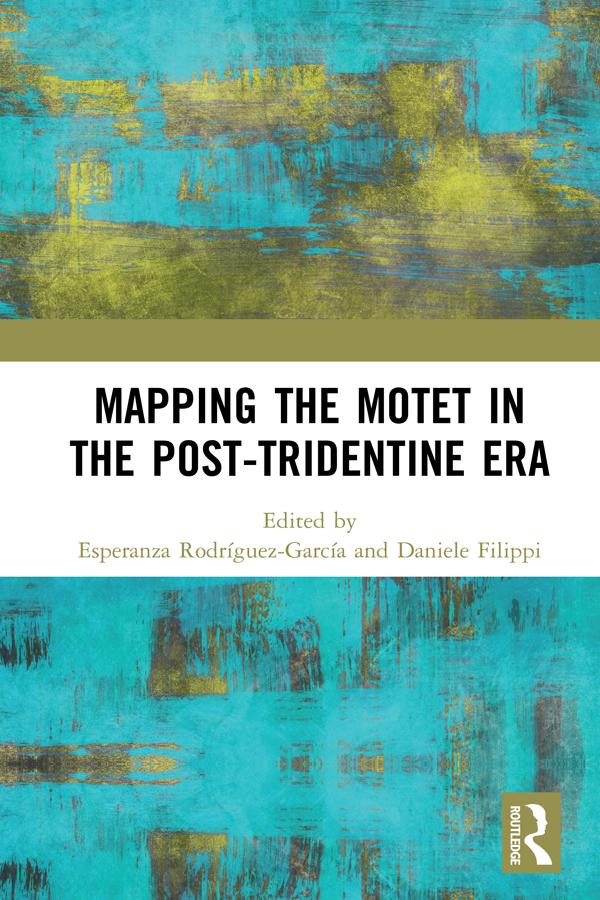
Mapping the Motet in the Post-Tridentine Era provides new dimensions to the discussion of the immense corpus of polyphonic motets produced and performed in the decades following the end of the Council of Trent in 1563. Beyond the genre’s rich connections with contemporary spiritual life and religious experience, the motet is understood here as having a multifaceted life in transmission, performance and reception. By analysing the repertoire itself, but also by studying its material life in books and accounts, in physical places and concrete sonic environments, and by investigating the ways in which the motet was listened to and talked about by contemporaries, the eleven chapters in this book redefine the cultural role of the genre. The motet, thanks to its own protean nature, not bound to any given textual, functional or compositional constraint, was able to convey cultural meanings powerfully, give voice to individual and collective identities, cross linguistic and confessional divides, and incarnate a model of learned and highly expressive musical composition. Case studies include considerations of composers (Palestrina, Victoria, Lasso), cities (Seville and Granada, Milan), books (calendrically ordered collections, non-liturgical music books) and special portions of the repertoire (motets pro defunctis, instrumental intabulations).
Paga fácilmente con tarjeta, Klarna, Apple Pay o Google Pay. ¿No estás contento? Siempre tienes 14 días de garantía de devolución. Lee más en nuestros términos. Si tienes preguntas, escríbenos a hello@memmo.org.
Memmo hace que estudiar sea más fácil, estés donde estés. Aquí tienes tus libros de texto y herramientas de estudio inteligentes en un solo lugar: resúmenes, quizzes, podcasts y flashcards. Y también a Ted, tu compañero de estudio que responde a todo lo que te preguntes. Más de 50 000 estudiantes ya estudian aquí. Está hecho para que aprendas más rápido y te estreses menos.