
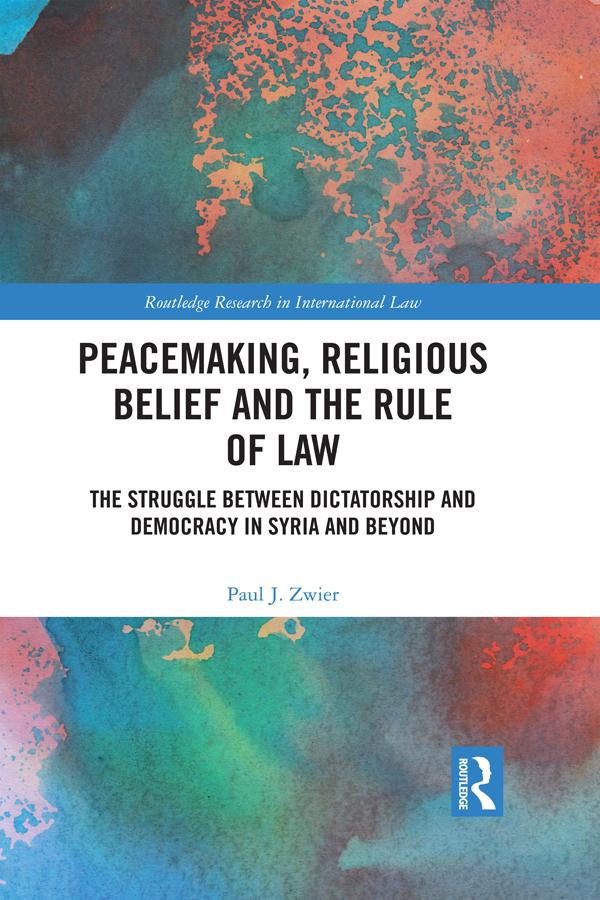
This book offers a new way of understanding the role of the mediator in teaching parties the interrelationship between sustainable peace, forgiveness, and international justice. It argues that the arrival of social media presents new opportunities for reaching sustainable peace agreements, through their use in gathering the detailed information that can match victims and perpetrators of past atrocities.
The author aims to advance a more expansive understanding of the subjects and limitations of making peace in the shadow of international law by examining the concepts of mediation and forgiveness that exist alongside law. To that end, the book offers an account of the role of the mediator that emerges from the interplay between Ricouerian imagination and forgiveness and predicts ever-greater opportunities for making peace and protecting human rights that can be facilitated by a harnessing of social media as a tool for making peace with justice.
The author also aims to examine how strategies for sustaining the peace must combat the inevitable frustrations with democracy that can lead to a slide into dictatorship. Assad, Obama, and the UN leadership and their decisions concerning making and maintaining peace in Syria are used as case studies to examine the interplay between a leaders’ religious beliefs, faith in democracy and rule of law, and impulses towards totalitarianism.
Paga fácilmente con tarjeta, Klarna, Apple Pay o Google Pay. ¿No estás contento? Siempre tienes 14 días de garantía de devolución. Lee más en nuestros términos. Si tienes preguntas, escríbenos a hello@memmo.org.
Memmo hace que estudiar sea más fácil, estés donde estés. Aquí tienes tus libros de texto y herramientas de estudio inteligentes en un solo lugar: resúmenes, quizzes, podcasts y flashcards. Y también a Ted, tu compañero de estudio que responde a todo lo que te preguntes. Más de 50 000 estudiantes ya estudian aquí. Está hecho para que aprendas más rápido y te estreses menos.