
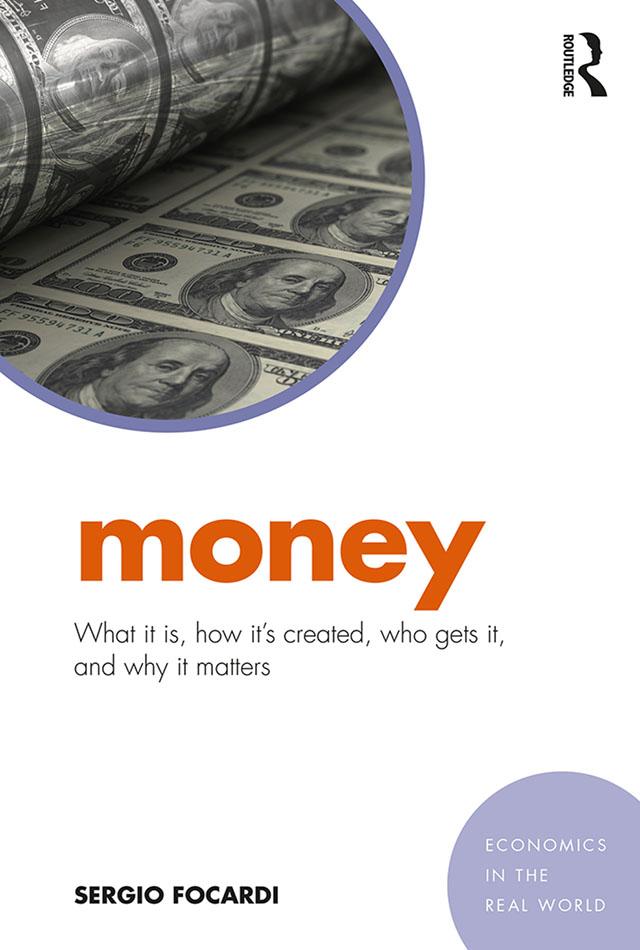
By enabling the storage and transfer of purchasing power, money facilitates economic transactions and coordinates economic activity. But what is money? How is it generated? Distributed? How does money acquire value and that value change? How does money impact the economy, society?
This book explores money as a system of "tokens" that represent the purchasing power of individual agents. It looks at how money developed from debt/credit relationships, barter and coins into a system of gold-backed currencies and bank credit and on to the present system of fiat money, bank credit, near-money and, more recently, digital currencies. The author successively examines how the money circuit has changed over the last 50 years, a period of stagnant wages, increased household borrowing and growing economic complexity, and argues for a new theory of economies as complex systems, coordinated by a banking and financial system.
Money: What It Is, How It’s Created, Who Gets It and Why It Matters will be of interest to students of economics and finance theory and anyone wanting a more complete understanding of monetary theory, economics, money and banking.
Paga fácilmente con tarjeta, Klarna, Apple Pay o Google Pay. ¿No estás contento? Siempre tienes 14 días de garantía de devolución. Lee más en nuestros términos. Si tienes preguntas, escríbenos a hello@memmo.org.
Memmo hace que estudiar sea más fácil, estés donde estés. Aquí tienes tus libros de texto y herramientas de estudio inteligentes en un solo lugar: resúmenes, quizzes, podcasts y flashcards. Y también a Ted, tu compañero de estudio que responde a todo lo que te preguntes. Más de 50 000 estudiantes ya estudian aquí. Está hecho para que aprendas más rápido y te estreses menos.