
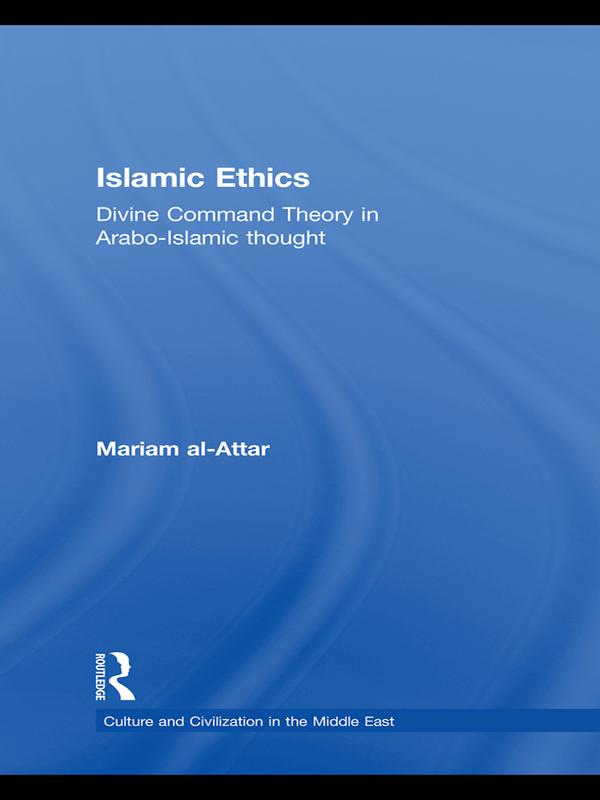
This book explores philosophical ethics in Arabo-Islamic thought. Examining the meaning, origin and development of "Divine Command Theory", it underscores the philosophical bases of religious fundamentalism that hinder social development and hamper dialogue between different cultures and nations.
Challenging traditional stereotypes of Islam, the book refutes contemporary claims that Islam is a defining case of ethical voluntarism, and that the prominent theory in Islamic ethical thought is Divine Command Theory. The author argues that, in fact, early Arab-Islamic scholars articulated moral theories: theories of value and theories of obligation. She traces the development of Arabo-Islamic ethics from the early Islamic theological and political debates between the Kharijites and the Murji’ites, shedding new light on the moral theory of Abd al-Jabbar al-Mu’tazili and the effects of this moral theory on post-Mu’tazilite ethical thought.
Highlighting important aspects in the development of Islamic thought, this book will appeal to students and scholars of Islamic moral thought and ethics, Islamic law, and religious fundamentalism.
Paga fácilmente con tarjeta, Klarna, Apple Pay o Google Pay. ¿No estás contento? Siempre tienes 14 días de garantía de devolución. Lee más en nuestros términos. Si tienes preguntas, escríbenos a hello@memmo.org.
Memmo hace que estudiar sea más fácil, estés donde estés. Aquí tienes tus libros de texto y herramientas de estudio inteligentes en un solo lugar: resúmenes, quizzes, podcasts y flashcards. Y también a Ted, tu compañero de estudio que responde a todo lo que te preguntes. Más de 50 000 estudiantes ya estudian aquí. Está hecho para que aprendas más rápido y te estreses menos.