
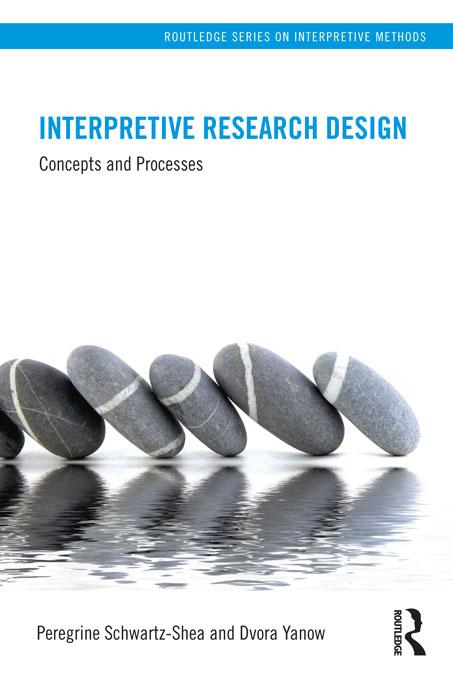
Research design is fundamental to all scientific endeavors, at all levels and in all institutional settings. In many social science disciplines, however, scholars working in an interpretive-qualitative tradition get little guidance on this aspect of research from the positivist-centered training they receive. This book is an authoritative examination of the concepts and processes underlying the design of an interpretive research project. Such an approach to design starts with the recognition that researchers are inevitably embedded in the intersubjective social processes of the worlds they study.
In focusing on researchers’ theoretical, ontological, epistemological, and methods choices in designing research projects, Schwartz-Shea and Yanow set the stage for other volumes in the Routledge Series on Interpretive Methods. They also engage some very practical issues, such as ethics reviews and the structure of research proposals. This concise guide explores where research questions come from, criteria for evaluating research designs, how interpretive researchers engage with "world-making," context, systematicity and flexibility, reflexivity and positionality, and such contemporary issues as data archiving and the researcher’s body in the field.
Paga fácilmente con tarjeta, Klarna, Apple Pay o Google Pay. ¿No estás contento? Siempre tienes 14 días de garantía de devolución. Lee más en nuestros términos. Si tienes preguntas, escríbenos a hello@memmo.org.
Memmo hace que estudiar sea más fácil, estés donde estés. Aquí tienes tus libros de texto y herramientas de estudio inteligentes en un solo lugar: resúmenes, quizzes, podcasts y flashcards. Y también a Ted, tu compañero de estudio que responde a todo lo que te preguntes. Más de 50 000 estudiantes ya estudian aquí. Está hecho para que aprendas más rápido y te estreses menos.