
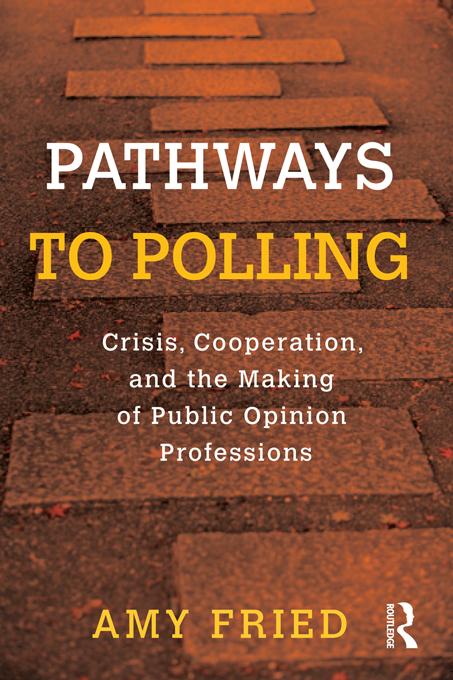
In midcentury America, the public opinion polling enterprise faced a crisis of legitimacy. Every major polling firm predicted a win for Thomas Dewey over Harry Truman in the 1948 presidential election—and of course they all got it wrong. This failure generated considerable criticisms of polling and pollsters were forced to defend their craft, the quantitative analysis of public sentiment.
Pathways to Polling argues that early political pollsters, market researchers, and academic and government survey researchers were entrepreneurial figures who interacted through a broad network that was critical to the growth of public opinion enterprises. This network helped polling pioneers gain and maintain concrete, financial support to further their discrete operations. After the Truman-Dewey debacle, such links helped political polling survive when it could have just as easily been totally discredited. Amy Fried demonstrates how interactions between ideas, organizations, and institutions produced changes in the technological, political, and organizational paths of public opinion polling, notably affecting later developments and practice. Public opinion enterprises have changed a good deal, in the intervening half century, even as today’s approaches have been deeply imprinted by these early efforts.
Paga fácilmente con tarjeta, Klarna, Apple Pay o Google Pay. ¿No estás contento? Siempre tienes 14 días de garantía de devolución. Lee más en nuestros términos. Si tienes preguntas, escríbenos a hello@memmo.org.
Memmo hace que estudiar sea más fácil, estés donde estés. Aquí tienes tus libros de texto y herramientas de estudio inteligentes en un solo lugar: resúmenes, quizzes, podcasts y flashcards. Y también a Ted, tu compañero de estudio que responde a todo lo que te preguntes. Más de 50 000 estudiantes ya estudian aquí. Está hecho para que aprendas más rápido y te estreses menos.