
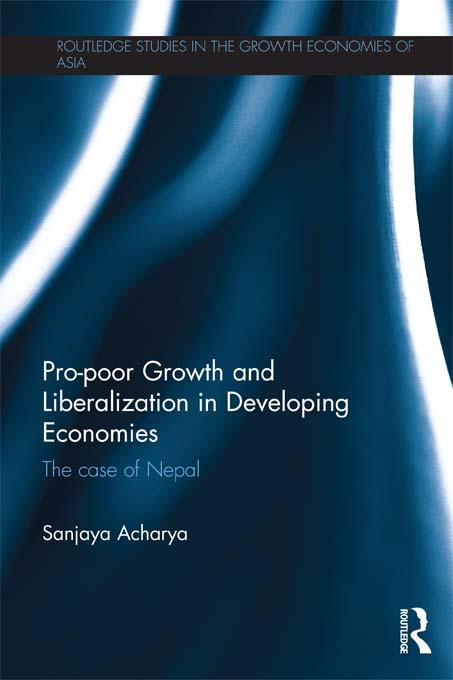
By looking at the link between trade liberalization and pro-poor growth in Nepal, this book explores how a developing and transition economy can attain higher and pro-poor growth along with the ongoing trend of globalization. The author develops a social accounting database for Nepal and applies it to quantify computable general equilibrium (CGE) model to investigate the trade-offs between growth and distribution that are associated with opening up the economy and deregulating it.
The book presents a number of pragmatic scenarios that bring about the desired pro-poor growth effects in order to demonstrate possible outcomes for policy making. The research findings apply to other economies with similar macroeconomic structure to Nepal; those small economies with a dominant, traditional, and stagnant agriculture; fragile industrial base, weak and volatile external sector, and almost half of the population living below the poverty line. This book will be of considerable interest to students and scholars in the areas of development economics, political economy of policy reforms, and trade and poverty with special emphasis on South Asia.
Paga fácilmente con tarjeta, Klarna, Apple Pay o Google Pay. ¿No estás contento? Siempre tienes 14 días de garantía de devolución. Lee más en nuestros términos. Si tienes preguntas, escríbenos a hello@memmo.org.
Memmo hace que estudiar sea más fácil, estés donde estés. Aquí tienes tus libros de texto y herramientas de estudio inteligentes en un solo lugar: resúmenes, quizzes, podcasts y flashcards. Y también a Ted, tu compañero de estudio que responde a todo lo que te preguntes. Más de 50 000 estudiantes ya estudian aquí. Está hecho para que aprendas más rápido y te estreses menos.