
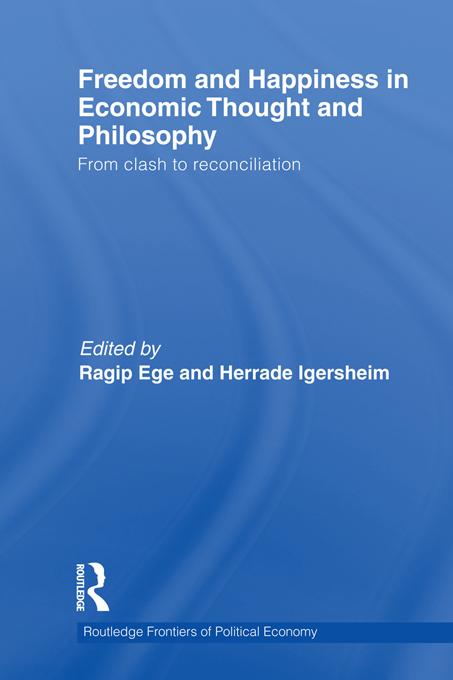
Starting from a distinction made by the American philosopher, John Rawls, in 2000 between two kinds of liberalism, "liberalism of freedom" and "liberalism of happiness", this book presents a range of articles by economists and philosophers debating the most fundamental aspects of the subject. These include the exact significance of Rawls’ distinction and how it can be related to European political philosophy on the one hand and to utilitarianism on the other hand; the various definitions of happiness and freedom and their implications and the informational basis of individual preferences.
The objectives of the book are twofold: first, it is devoted to a thorough analysis of the founding texts of both liberalisms. It aims to determine the logic of selection of the concepts which these traditions consider as relevant. The Kantian pair "Reasonable"/"Rational" can be seen as the basis on which these concepts are defined, our final concern being to reveal the profound relations of complementarity between them: we call it reconciliation. Secondly, we consider a fundamental issue of welfare economics – how to appraise individual preferences – in light of the Rawlsian distinction. It is emphasized that neither a criterion based on liberalism of freedom by itself, nor an evaluation in terms of liberalism of happiness by itself exhausts the question of utility. One must combine both aspects in order to cope with that issue. To do so, it is claimed that one can resort to the concept of metaranking of preferences.
All the contributions included in this book are the outcomes of a collective research project of three years. The contributors come from a variety of backgrounds and yet are unified in developing a specific position about freedom and happiness. This book should be of interest to those focusing on the history of economic thought as well as moral, political and economic philosophy.
Paga fácilmente con tarjeta, Klarna, Apple Pay o Google Pay. ¿No estás contento? Siempre tienes 14 días de garantía de devolución. Lee más en nuestros términos. Si tienes preguntas, escríbenos a hello@memmo.org.
Memmo hace que estudiar sea más fácil, estés donde estés. Aquí tienes tus libros de texto y herramientas de estudio inteligentes en un solo lugar: resúmenes, quizzes, podcasts y flashcards. Y también a Ted, tu compañero de estudio que responde a todo lo que te preguntes. Más de 50 000 estudiantes ya estudian aquí. Está hecho para que aprendas más rápido y te estreses menos.