
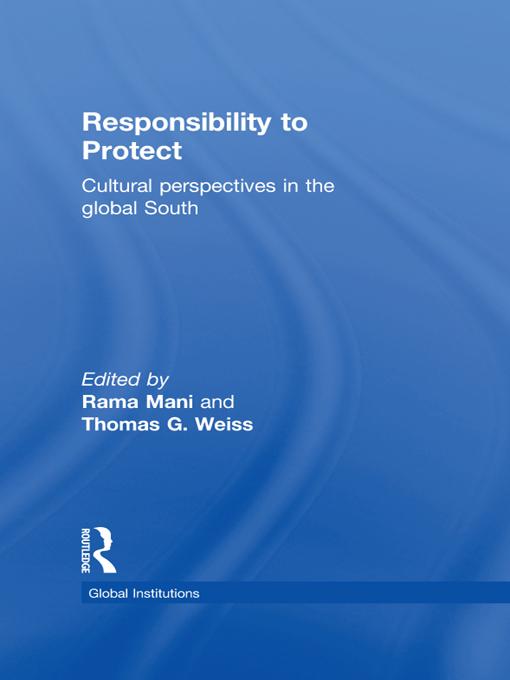
This volume explores in a novel and challenging way the emerging norm of the Responsibility to Protect (R2P), initially adopted by the United Nations World Summit in 2005 following significant debate throughout the preceding decade.
This work seeks to uncover whether this norm and its founding values have resonance and grounding within diverse cultures and within the experiences of societies that have directly been torn apart by mass atrocity crimes. The contributors to this collection analyze the responsibility to protect through multiple disciplines—philosophy, religion and spirituality, anthropology, and aesthetics in addition to international relations and law—to explore what light alternative perspectives outside of political science and international relations shed upon this emerging norm.
In each case, the disciplinary analysis emanates from the global South and from scholars located within countries that experienced violent political upheaval. Hence, they draw upon not only theory but also the first-hand experience with conscience-shocking crimes. Their retrospective and prospective analyses could and should help shape the future implementation of R2P in accordance with insights from vastly different contexts.
Offering a cutting edge contribution to thinking in the area, this is essential reading for all those with an interest in humanitarian intervention, peace and conflict studies, critical security studies and peacebuilding.
Paga fácilmente con tarjeta, Klarna, Apple Pay o Google Pay. ¿No estás contento? Siempre tienes 14 días de garantía de devolución. Lee más en nuestros términos. Si tienes preguntas, escríbenos a hello@memmo.org.
Memmo hace que estudiar sea más fácil, estés donde estés. Aquí tienes tus libros de texto y herramientas de estudio inteligentes en un solo lugar: resúmenes, quizzes, podcasts y flashcards. Y también a Ted, tu compañero de estudio que responde a todo lo que te preguntes. Más de 50 000 estudiantes ya estudian aquí. Está hecho para que aprendas más rápido y te estreses menos.