
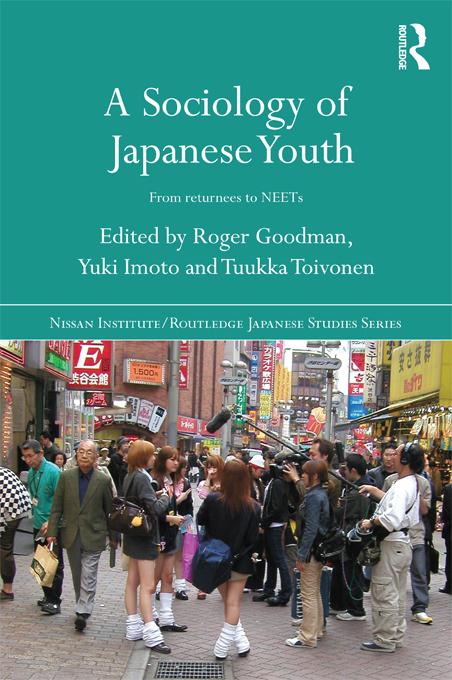
Over the past thirty years, whilst Japan has produced a diverse set of youth cultures which have had a major impact on popular culture across the globe, it has also developed a succession of youth problems which have led to major concerns within the country itself. Drawing on detailed empirical fieldwork, the authors of this volume set these issues in a clearly articulated ‘social constructionist’ framework, and put forth a sociology of Japanese youth problems which argues that there is a certain predictability about the way in which these problems are discovered, defined and dealt with.
The chapters include case studies covering issues such as:
Returnee children (kikokushijo)
Compensated dating (enjo kōsai)
Corporal punishment (taibatsu)
Bullying (ijime)
Child abuse (jidō gyakutai)
The withdrawn youth (hikikomori) and
NEETs (not in education, employment or training)
By examining these various social problems collectively, A Sociology of Japanese Youth explains why particular youth problems appeared when they did and what lessons they can provide for the study of youth problems in other societies.
This book will be of huge interest to students and scholars of Japanese society and culture, the sociology of Japan, Japanese anthropology and the comparative sociology of youth studies.
Paga fácilmente con tarjeta, Klarna, Apple Pay o Google Pay. ¿No estás contento? Siempre tienes 14 días de garantía de devolución. Lee más en nuestros términos. Si tienes preguntas, escríbenos a hello@memmo.org.
Memmo hace que estudiar sea más fácil, estés donde estés. Aquí tienes tus libros de texto y herramientas de estudio inteligentes en un solo lugar: resúmenes, quizzes, podcasts y flashcards. Y también a Ted, tu compañero de estudio que responde a todo lo que te preguntes. Más de 50 000 estudiantes ya estudian aquí. Está hecho para que aprendas más rápido y te estreses menos.