
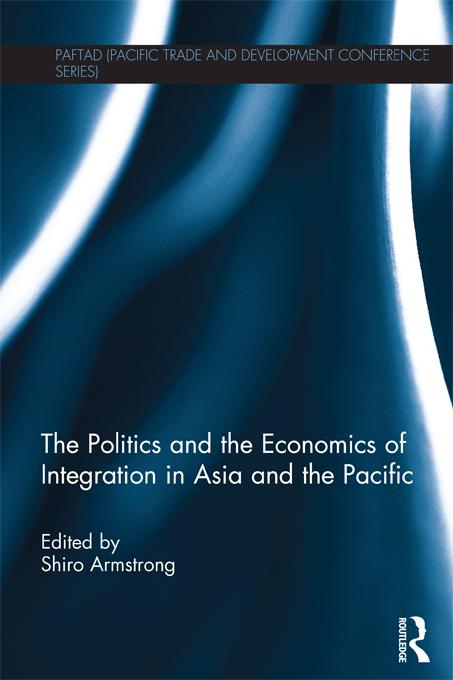
The shape of economic integration in the global and regional economies - and the extent to which goods, services and factors of production move more or less freely across borders - depends not only upon underlying economic conditions but also upon politics. Whether integration is market-led, as has been the case in Asia, or institution-led as in Europe, there are political elements that affect all forms of regional and international economic integration.
While geopolitics influences international economic integration, so too does domestic politics. Economic integration in Asia has been driven by rapid unilateral trade and investment liberalization and, while trade and investment patterns have been determined largely by comparative advantage, political forces have also affected patterns of economic interdependence. The form that regional institutions take, and their effectiveness, also depends on political relations between countries. The particular circumstances in Asia, and the relationships between regional economies has profoundly shaped regional institutions and will continue to do so.
The chapters in this volume draw on papers originally presented to the 33rd Pacific Trade and Development Conference held in Taipei in 2009 to look in original ways at how politics shape economic integration and its various dimensions in Asia and the Pacific and globally.
Paga fácilmente con tarjeta, Klarna, Apple Pay o Google Pay. ¿No estás contento? Siempre tienes 14 días de garantía de devolución. Lee más en nuestros términos. Si tienes preguntas, escríbenos a hello@memmo.org.
Memmo hace que estudiar sea más fácil, estés donde estés. Aquí tienes tus libros de texto y herramientas de estudio inteligentes en un solo lugar: resúmenes, quizzes, podcasts y flashcards. Y también a Ted, tu compañero de estudio que responde a todo lo que te preguntes. Más de 50 000 estudiantes ya estudian aquí. Está hecho para que aprendas más rápido y te estreses menos.