
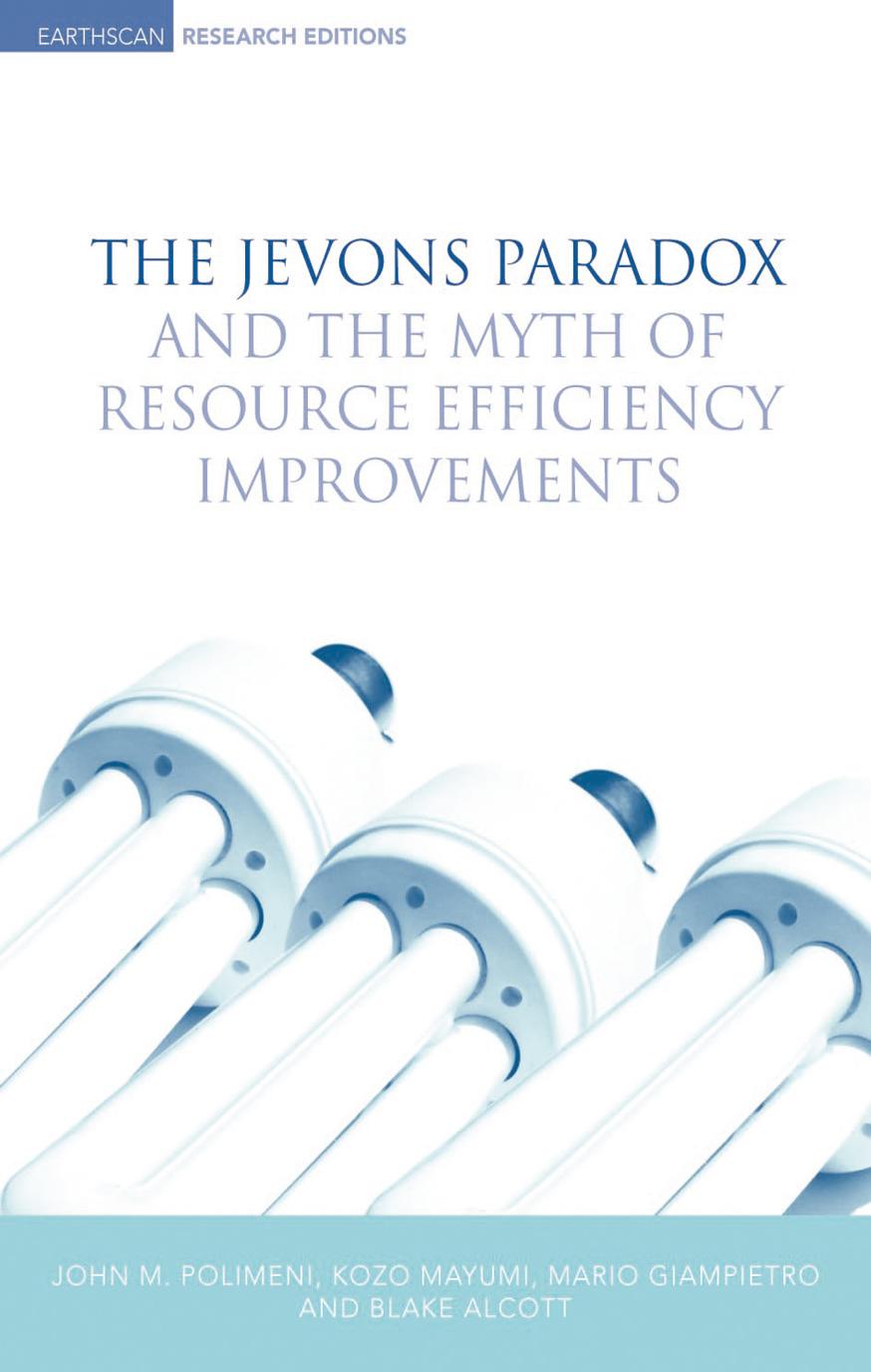
�The Jevons Paradox�, which was first expressed in 1865 by William Stanley Jevons in relation to use of coal, states that an increase in efficiency in using a resource leads to increased use of that resource rather than to a reduction. This has subsequently been proved to apply not just to fossil fuels, but other resource use scenarios. For example, doubling the efficiency of food production per hectare over the last 50 years (due to the Green Revolution) did not solve the problem of hunger. The increase in efficiency increased production and worsened hunger because of the resulting increase in population. The implications of this in today�s world are substantial. Many scientists and policymakers argue that future technological innovations will reduce consumption of resources; the Jevons Paradox explains why this may be a false hope.
This is the first book to provide a historical overview of the Jevons Paradox, provide evidence for its existence and apply it to complex systems. Written and edited by world experts in the fields of economics, ecological economics, technology and the environment, it explains the myth of efficiency and explores its implications for resource usage (particularly oil). It is a must-read for policymakers, natural resource managers, academics and students concerned with the effects of efficiency on resource use.
Paga fácilmente con tarjeta, Klarna, Apple Pay o Google Pay. ¿No estás contento? Siempre tienes 14 días de garantía de devolución. Lee más en nuestros términos. Si tienes preguntas, escríbenos a hello@memmo.org.
Memmo hace que estudiar sea más fácil, estés donde estés. Aquí tienes tus libros de texto y herramientas de estudio inteligentes en un solo lugar: resúmenes, quizzes, podcasts y flashcards. Y también a Ted, tu compañero de estudio que responde a todo lo que te preguntes. Más de 50 000 estudiantes ya estudian aquí. Está hecho para que aprendas más rápido y te estreses menos.