
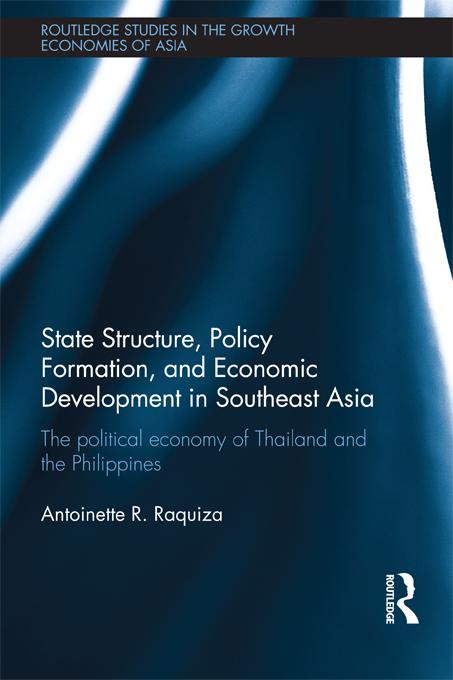
Why do some small, developing countries industrialize and others don’t? What factors account for different economic performance among states that are vulnerable to external shocks, crony capitalism, and political instability? This book argues that the answer lies in the structuring of state power, specifically the way different sets of governing elites – political leaders and economic technocrats – are embedded in political organisations and state institutions, and the way these elites relate to each other in the economic development policy process. Conducting a comparative historical analysis of Thailand and the Philippines, the book argues that the institutional settings of governing elites influence economic outcomes. In Thailand, political power traditionally connects to state institutions in ways that has limited the impact of political turnovers and global downturns - conducive to long-term industrial activities. In contrast, Philippine state power derives from family networks that merge social and political power, suited to fast-moving, short-term commercial interests. In focusing on this political and institutional story, the author analyses the current development dilemmas of countries, weighed down by historical legacies of unstable regimes, dependency, and social conflict, and how they are likely to develop in the future.
Paga fácilmente con tarjeta, Klarna, Apple Pay o Google Pay. ¿No estás contento? Siempre tienes 14 días de garantía de devolución. Lee más en nuestros términos. Si tienes preguntas, escríbenos a hello@memmo.org.
Memmo hace que estudiar sea más fácil, estés donde estés. Aquí tienes tus libros de texto y herramientas de estudio inteligentes en un solo lugar: resúmenes, quizzes, podcasts y flashcards. Y también a Ted, tu compañero de estudio que responde a todo lo que te preguntes. Más de 50 000 estudiantes ya estudian aquí. Está hecho para que aprendas más rápido y te estreses menos.