
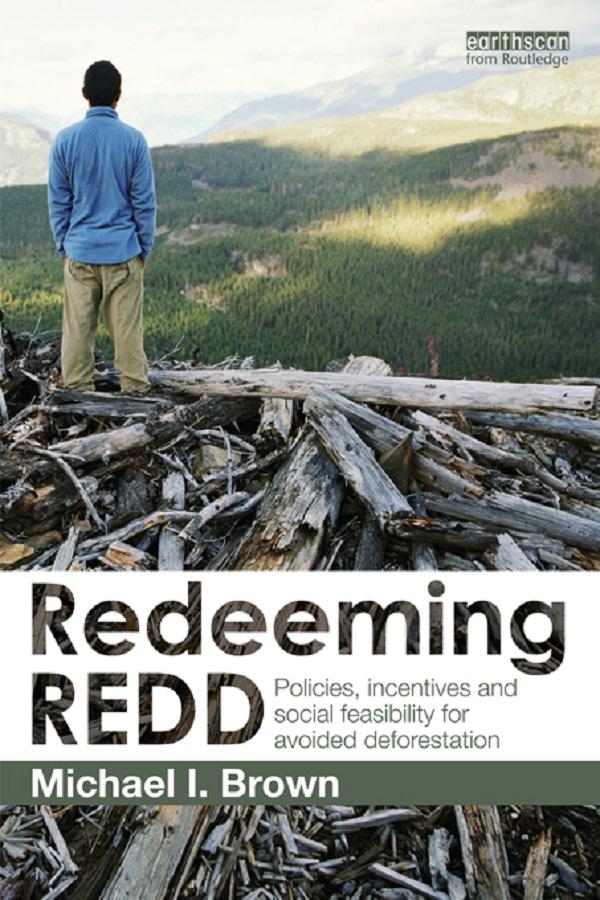
It is now well accepted that deforestation is a key source of greenhouse gas emissions and of climate change, with forests representing major sinks for carbon. As a result, public and private initiatives for reducing emissions from deforestation and forest degradation (REDD) have been widely endorsed by policy-makers. A key issue is the feasibility of carbon trading or other incentives to encourage land-owners and indigenous people, particularly in developing tropical countries, to conserve forests, rather than to cut them down for agricultural or other development purposes.
This book presents a major critique of the aims and policies of REDD as currently structured, particularly in terms of their social feasibility. It is shown how the claims to be able to reduce greenhouse gas emissions as well as enhance people's livelihoods and biodiversity conservation are unrealistic. There is a naive assumption that technical or economic fixes are sufficient for success. However, the social and governance aspects of REDD, and its enhanced version known as REDD+, are shown to be implausible. Instead to enhance REDD's prospects, the author provides a roadmap for developing a new social contract that puts people first.
Paga fácilmente con tarjeta, Klarna, Apple Pay o Google Pay. ¿No estás contento? Siempre tienes 14 días de garantía de devolución. Lee más en nuestros términos. Si tienes preguntas, escríbenos a hello@memmo.org.
Memmo hace que estudiar sea más fácil, estés donde estés. Aquí tienes tus libros de texto y herramientas de estudio inteligentes en un solo lugar: resúmenes, quizzes, podcasts y flashcards. Y también a Ted, tu compañero de estudio que responde a todo lo que te preguntes. Más de 50 000 estudiantes ya estudian aquí. Está hecho para que aprendas más rápido y te estreses menos.