
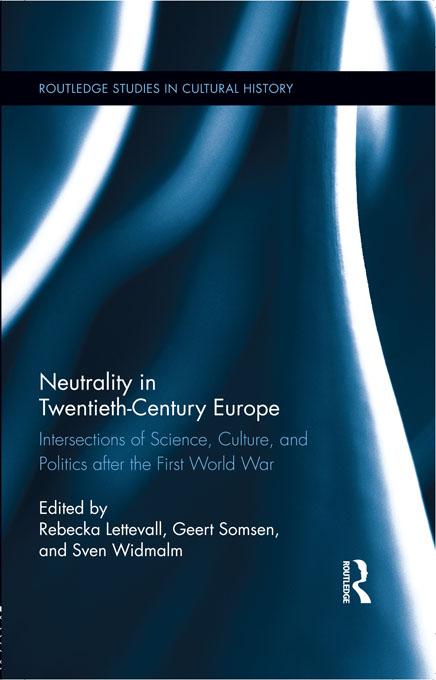
Whether in science or in international politics, neutrality has sometimes been promoted, not only as a viable political alternative but as a lofty ideal – in politics by nations proclaiming their peacefulness, in science as an underpinning of epistemology, in journalism and other intellectual pursuits as a foundation of a professional ethos. Time and again scientists and other intellectuals have claimed their endeavors to be neutral, elevated above the world of partisan conflict and power politics. This volume studies the resonances between neutrality in science and culture and neutrality in politics. By analyzing the activities of scientists, intellectuals, and politicians (sometimes overlapping categories) of mostly neutral nations in the First World War and after, it traces how an ideology of neutralism was developed that soon was embraced by international organizations.
This book explores how the notion of neutrality has been used and how a neutralist discourse developed in history. None of the contributions take claims of neutrality at face value – some even show how they were made to advance partisan interests. The concept was typically clustered with notions, such as peace, internationalism, objectivity, rationality, and civilization. But its meaning was changeable – varying with professional, ideological, or national context. As such, Neutrality in Twentieth-Century Europe presents a different perspective on the century than the story of the great belligerent powers, and one in which science, culture, and politics are inextricably mixed.
Paga fácilmente con tarjeta, Klarna, Apple Pay o Google Pay. ¿No estás contento? Siempre tienes 14 días de garantía de devolución. Lee más en nuestros términos. Si tienes preguntas, escríbenos a hello@memmo.org.
Memmo hace que estudiar sea más fácil, estés donde estés. Aquí tienes tus libros de texto y herramientas de estudio inteligentes en un solo lugar: resúmenes, quizzes, podcasts y flashcards. Y también a Ted, tu compañero de estudio que responde a todo lo que te preguntes. Más de 50 000 estudiantes ya estudian aquí. Está hecho para que aprendas más rápido y te estreses menos.