
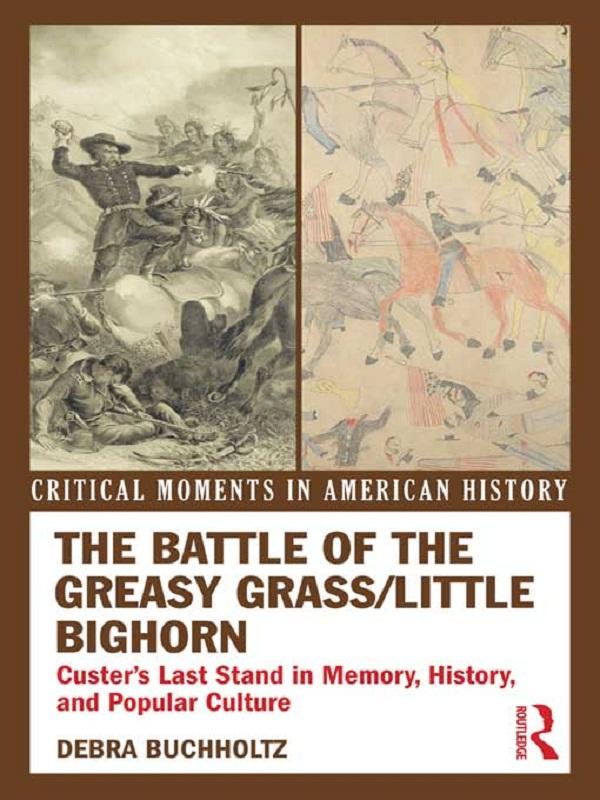
In June of 1876, the U.S. government’s plan to pressure the Lakota and Cheyenne people onto reservations came to a dramatic and violent end with a battle that would become enshrined in American memory. In the eyes of many Americans at the time, the Battle of Little Bighorn represented a symbolic struggle between the civilized and the savage. Known as the Battle of the Greasy Grass to the Lakota, the Battle of Little Bighorn to the people who suppressed them, and as Custer’s Last Stand in the annals of popular culture, the event continues to captivate students of American history.
In The Battle of Little Bighorn, Debra Buchholtz narrates the history of the battle and critically examines the legacy it has left. Through government documents, newspaper articles, and eyewitness accounts, Buchholtz situates the material and symbolic impact of the battle at the time. Using popular film and cultural references, she investigates the ways in which the wake of the event continues to shape the way students understand indigenous peoples, the Wild West, and the history of America.
Paga fácilmente con tarjeta, Klarna, Apple Pay o Google Pay. ¿No estás contento? Siempre tienes 14 días de garantía de devolución. Lee más en nuestros términos. Si tienes preguntas, escríbenos a hello@memmo.org.
Memmo hace que estudiar sea más fácil, estés donde estés. Aquí tienes tus libros de texto y herramientas de estudio inteligentes en un solo lugar: resúmenes, quizzes, podcasts y flashcards. Y también a Ted, tu compañero de estudio que responde a todo lo que te preguntes. Más de 50 000 estudiantes ya estudian aquí. Está hecho para que aprendas más rápido y te estreses menos.