
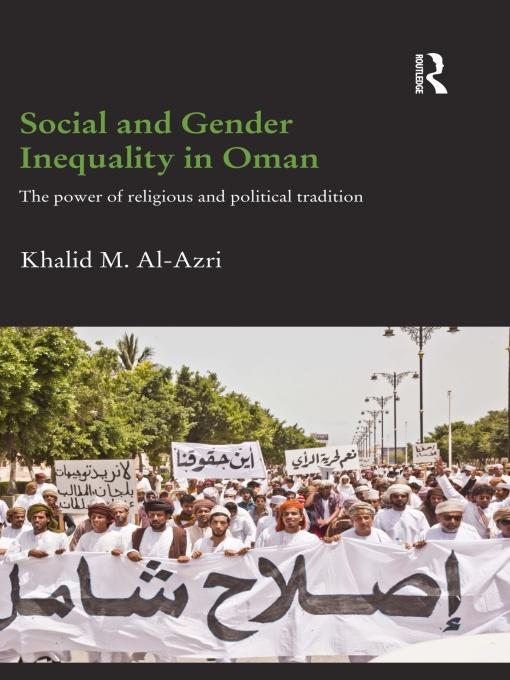
Looking at the social, political and legal changes in Oman since 1970, this book challenges the Islamic and tribal traditional cultural norms relating to marriage, divorce and women’s rights which guide social and legal practice in the modern Omani state. The book argues that despite the establishment of legal instruments guaranteeing equality for all citizens, the fact that the state depends upon Islamic and tribal elites for its legitimacy invalidates these guarantees in practice. Two particular features of the legal and cultural regulation of marriage and marital rights are focused on - the perceived requirement for kafa’a or equality in marriage between so called high and low socio-economic status peoples is examined, and the institution of talaq, which grants greater rights to men than to women in appeals for divorce. This book addresses highly complex subjects with great rigor, in terms of empirical research and engagement with theory, sociological and political as well as theological and legal. It is an interesting investigation of the divisions of authority between the state, Islam and tribal norms, highlighting barriers to reform in both Oman and wider Islamic society, and advocating the removal of such obstacles.
Paga fácilmente con tarjeta, Klarna, Apple Pay o Google Pay. ¿No estás contento? Siempre tienes 14 días de garantía de devolución. Lee más en nuestros términos. Si tienes preguntas, escríbenos a hello@memmo.org.
Memmo hace que estudiar sea más fácil, estés donde estés. Aquí tienes tus libros de texto y herramientas de estudio inteligentes en un solo lugar: resúmenes, quizzes, podcasts y flashcards. Y también a Ted, tu compañero de estudio que responde a todo lo que te preguntes. Más de 50 000 estudiantes ya estudian aquí. Está hecho para que aprendas más rápido y te estreses menos.