
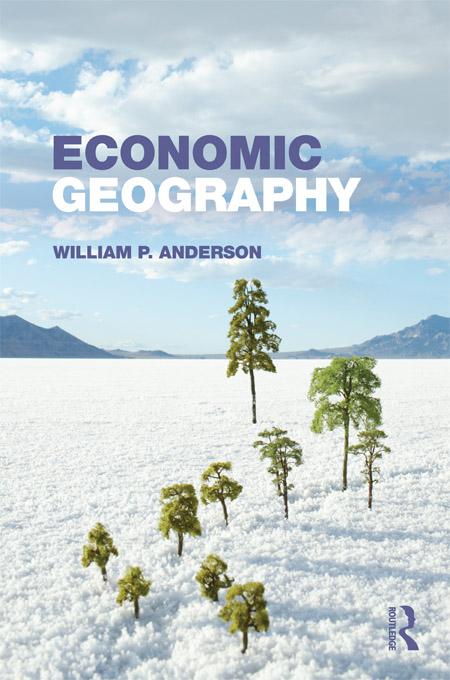
Economic geographers study and attempt to explain the spatial configuration of economic activities, including the production of goods and services, their transfer from one economic agent to another and their transformation into utility by consumers. The spatial configuration, which includes both the pattern of activities on the map and the relationships between activities occurring in different places, is the outcome of a vast number of distinct but interrelated decisions made by firms, households, governments and a variety of other private and public institutions. The goal of this book is to provide the student with a rigorous introduction to a diverse but logically consistent set of analytical models of the spatial decisions and interactions that drive the evolution of the economic landscape.
It begins by explaining fundamental concepts that are critical to all topics in economic geography: the friction of distance, agglomeration, spatial interaction, market mechanisms, natural resources and production technologies. Sections follow to cover major areas of inquiry including multiregional economies, location theory, markets for space and systems of cities. The final section synthesizes and builds on these topics to address two trends that provide particular challenges to economic geographers today: globalization and the emergence of the knowledge economy.
Paga fácilmente con tarjeta, Klarna, Apple Pay o Google Pay. ¿No estás contento? Siempre tienes 14 días de garantía de devolución. Lee más en nuestros términos. Si tienes preguntas, escríbenos a hello@memmo.org.
Memmo hace que estudiar sea más fácil, estés donde estés. Aquí tienes tus libros de texto y herramientas de estudio inteligentes en un solo lugar: resúmenes, quizzes, podcasts y flashcards. Y también a Ted, tu compañero de estudio que responde a todo lo que te preguntes. Más de 50 000 estudiantes ya estudian aquí. Está hecho para que aprendas más rápido y te estreses menos.