
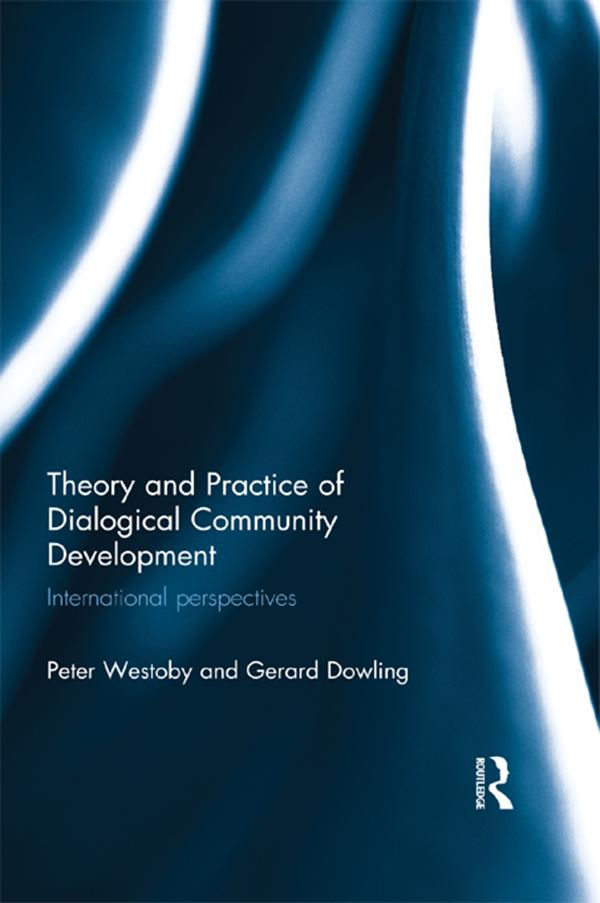
This book proposes that community development has been increasingly influenced and co-opted by a modernist, soulless, rational philosophy - reducing it to a shallow technique for ‘solving community problems’. In contrast, this dialogical approach re-maps the ground of community development practice within a frame of ideas such as dialogue, hospitality and depth. For the first time community development practitioners are provided with an accessible understanding of dialogue and its relevance to their practice, exploring the contributions of internationally significant thinkers such as P. Freire, M. Buber, D. Bohm and H.G Gadamer, J. Derrida, G. Esteva and R. Sennett. What makes the book distinctive is that: first, it identifies a dialogical tradition of community development and considers how such a tradition shapes practice within contemporary contexts and concerns – economic, social, political, cultural and ecological. Second, the book contrasts such an approach with technical and instrumental approaches to development that fail to take complex systems seriously. Third, the approach links theory to practice through a combination of storytelling and theory-reflection – ensuring that readers are drawn into a practice-theory that they feel increasingly confident has been 'tried and tested' in the world over the past 25 years.
Paga fácilmente con tarjeta, Klarna, Apple Pay o Google Pay. ¿No estás contento? Siempre tienes 14 días de garantía de devolución. Lee más en nuestros términos. Si tienes preguntas, escríbenos a hello@memmo.org.
Memmo hace que estudiar sea más fácil, estés donde estés. Aquí tienes tus libros de texto y herramientas de estudio inteligentes en un solo lugar: resúmenes, quizzes, podcasts y flashcards. Y también a Ted, tu compañero de estudio que responde a todo lo que te preguntes. Más de 50 000 estudiantes ya estudian aquí. Está hecho para que aprendas más rápido y te estreses menos.