
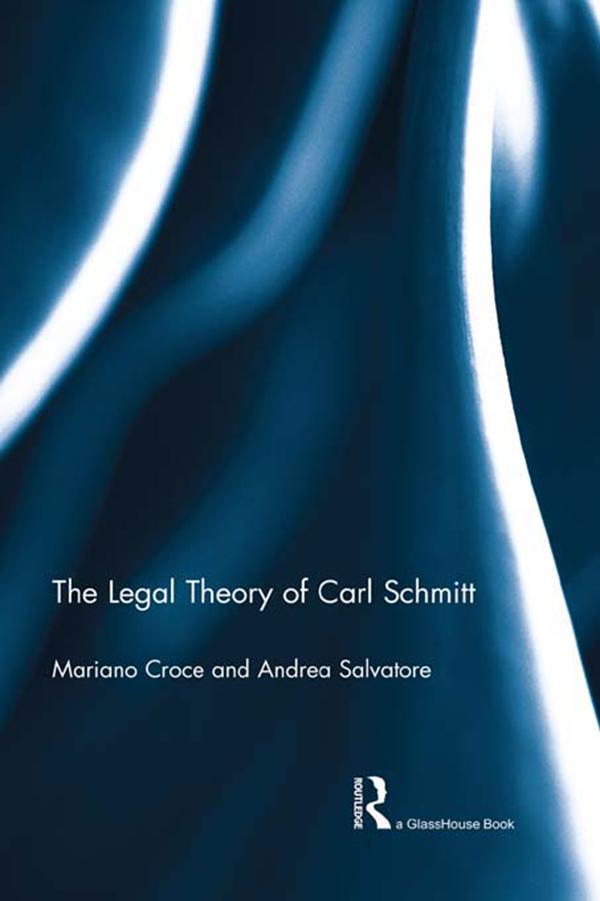
The Legal Theory of Carl Schmitt provides a detailed analysis of Schmitt’s institutional theory of law, mainly developed in the books published between the end of the 1920s and the beginning of the 1930s. By reading Schmitt’s overall work through the lens of his institutional turn, the authors offer a strikingly different interpretation of Schmitt’s theory of politics, law and the relation between these two domains. The book argues that Schmitt’s adhesion to legal institutionalism was a key theoretical achievement, based on serious reconsideration of the main flaws of his own decisionist paradigm, in the light of the French and Italian institutional theories of law. In so doing, the authors elucidate how Schmitt was able to unravel many of the impasses that affected his previous conceptual framework. The authors also make comparisons between Schmitt and other leading legal theorists (H. Kelsen, M. Hauriou, S. Romano and C. Mortati) and explain why the current legal debate should take into serious account his legacy.
Paga fácilmente con tarjeta, Klarna, Apple Pay o Google Pay. ¿No estás contento? Siempre tienes 14 días de garantía de devolución. Lee más en nuestros términos. Si tienes preguntas, escríbenos a hello@memmo.org.
Memmo hace que estudiar sea más fácil, estés donde estés. Aquí tienes tus libros de texto y herramientas de estudio inteligentes en un solo lugar: resúmenes, quizzes, podcasts y flashcards. Y también a Ted, tu compañero de estudio que responde a todo lo que te preguntes. Más de 50 000 estudiantes ya estudian aquí. Está hecho para que aprendas más rápido y te estreses menos.