
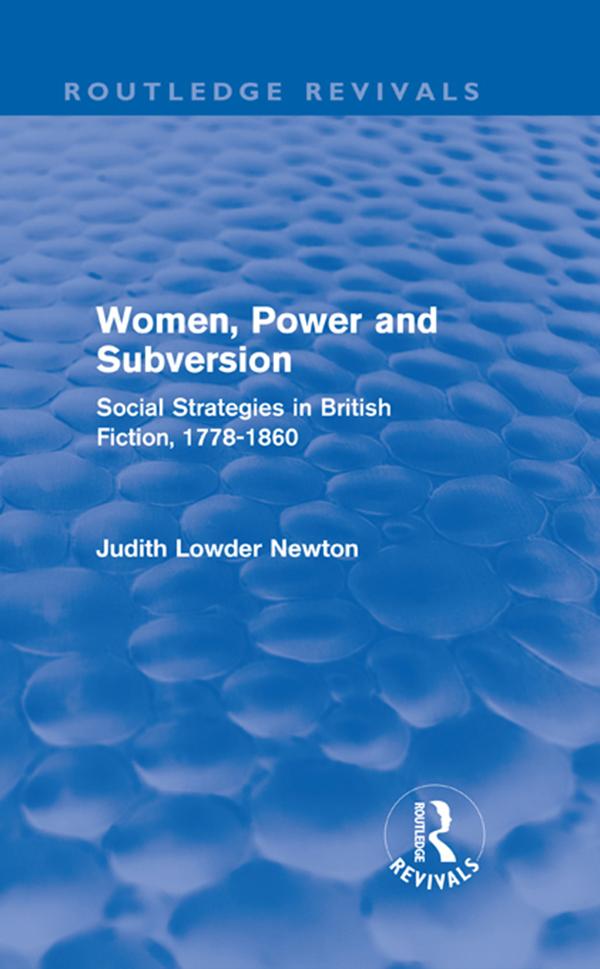
First published in 1981, this book explores the reactions of some female writers to the social effects of industrial capitalism between 1778 and 1860. The period set in motion a crisis over the status of middle-class women that culminated in the constructed idea of "women’s proper sphere". This concept disguised inequities between men and women, first by asserting the reality of female power, and then by restricting it to self-sacrificing influence.
In this book, Judith Newton analyses novels such as Fanny Burney’s Evelina, Jane Austen’s Pride and Prejudice, Charlotte Brontë’s Villette and George Eliot’s The Mill on the Floss in order to demonstrate how some female writers reacted to the issue by covertly resisting inequities of power and reconciling ideologies in their art. She argues that in this time period, novels became increasingly rebellious as well as ambivalent . Heroines were endowed with power, and emphasis was given to female ability, rather than to feminine influence.
Paga fácilmente con tarjeta, Klarna, Apple Pay o Google Pay. ¿No estás contento? Siempre tienes 14 días de garantía de devolución. Lee más en nuestros términos. Si tienes preguntas, escríbenos a hello@memmo.org.
Memmo hace que estudiar sea más fácil, estés donde estés. Aquí tienes tus libros de texto y herramientas de estudio inteligentes en un solo lugar: resúmenes, quizzes, podcasts y flashcards. Y también a Ted, tu compañero de estudio que responde a todo lo que te preguntes. Más de 50 000 estudiantes ya estudian aquí. Está hecho para que aprendas más rápido y te estreses menos.