
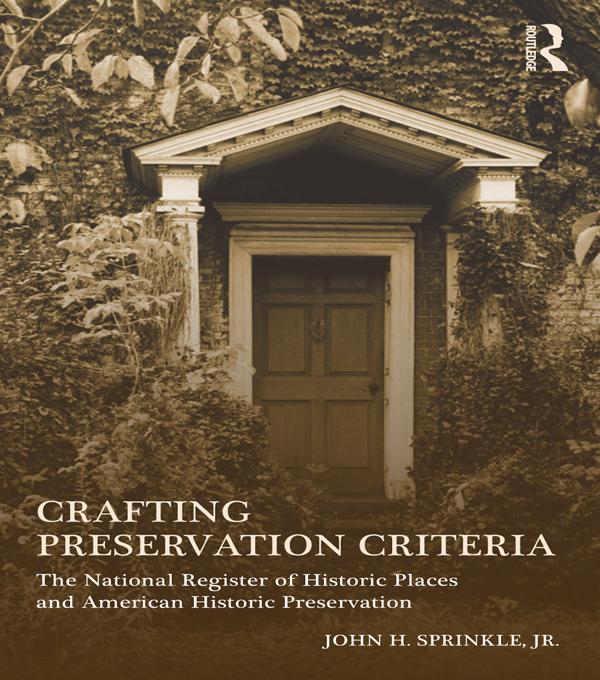
In 1966, American historic preservation was transformed by the passage of the National Historic Preservation Act, which created a National Register of Historic Places. Now comprising more than 1.4 million historic properties across the country, the National Register is the official federal list of places in the United States thought to be worthy of preservation.
One of the fundamental principles of the National Register is that every property is evaluated according to a standard set of criteria that provide the framework for understanding why a property is significant in American history. The origins of these criteria are important because they provide the threshold for consideration by a broad range of federal preservation programs, from planning for continued adaptive use, to eligibility for grants, and inclusion in heritage tourism and educational programs.
Crafting Preservation Criteria sets out these preservation criteria for students, explaining how they got added to the equation, and elucidating the test cases that allowed for their use. From artworks to churches, from 'the fifty year rule' to 'the historic scene', students will learn how places have been historically evaluated to be placed on the National Register, and how the criteria evolved over time.
Paga fácilmente con tarjeta, Klarna, Apple Pay o Google Pay. ¿No estás contento? Siempre tienes 14 días de garantía de devolución. Lee más en nuestros términos. Si tienes preguntas, escríbenos a hello@memmo.org.
Memmo hace que estudiar sea más fácil, estés donde estés. Aquí tienes tus libros de texto y herramientas de estudio inteligentes en un solo lugar: resúmenes, quizzes, podcasts y flashcards. Y también a Ted, tu compañero de estudio que responde a todo lo que te preguntes. Más de 50 000 estudiantes ya estudian aquí. Está hecho para que aprendas más rápido y te estreses menos.