
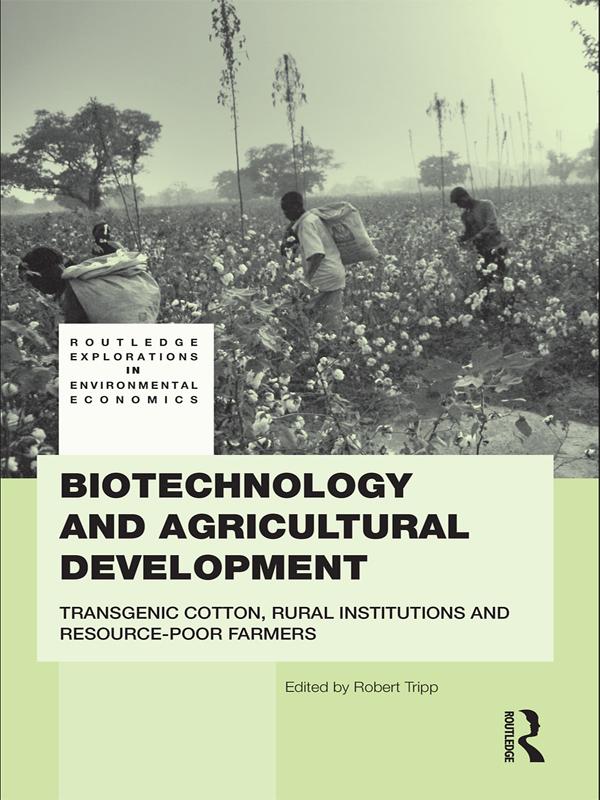
This book addresses the continuing controversy over the potential impact of genetically modified (GM) crops in developing countries. Supporters of the technology claim it offers one of the best hopes for increasing agricultural production and reducing rural poverty, while opponents see it as an untested intervention that will bring corporate control of peasant farming. The book examines the issues by reviewing the experience of GM, insect-resistant cotton, the most widely grown GM crop in developing countries.
The book begins with an introduction to agricultural biotechnology, a brief examination of the history of cotton production technology (and the institutions required to support that technology), and a thorough review of the literature on the agronomic performance of GM cotton. It then provides a review of the economic and institutional outcomes of GM cotton during the first decade of its use. The core of the book is four country case studies based on original fieldwork in the principal developing countries growing GM cotton (China, India, South Africa and Colombia). The book concludes with a summary of the experience to date and implications for the future of GM crops in developing countries.
This review challenges those who have predicted technological failure by describing instances in which GM cotton has proven useful and has been enthusiastically taken up by smallholders. But it also challenges those who claim that biotechnology can take the lead in agricultural development by examining the precarious institutional basis on which these hopes rest in most countries. The analysis shows how biotechnology’s potential contribution to agricultural development must be seen as a part of (and often secondary to) more fundamental policy change. The book should be of interest to a wide audience concerned with agricultural development. This would include academics in the social and agricultural sciences, donor agencies and NGOs.
Paga fácilmente con tarjeta, Klarna, Apple Pay o Google Pay. ¿No estás contento? Siempre tienes 14 días de garantía de devolución. Lee más en nuestros términos. Si tienes preguntas, escríbenos a hello@memmo.org.
Memmo hace que estudiar sea más fácil, estés donde estés. Aquí tienes tus libros de texto y herramientas de estudio inteligentes en un solo lugar: resúmenes, quizzes, podcasts y flashcards. Y también a Ted, tu compañero de estudio que responde a todo lo que te preguntes. Más de 50 000 estudiantes ya estudian aquí. Está hecho para que aprendas más rápido y te estreses menos.