
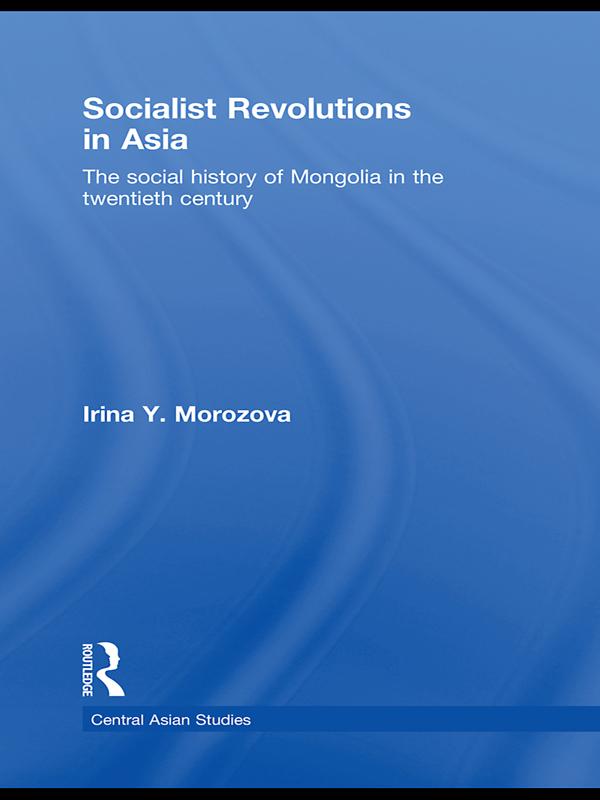
Contemporary Mongolia is often seen as one of the most open and democratic societies in Asia, undergoing remarkable post-socialist transformation. Although the former ruling party, the Mongolian People’s Revolutionary Party (the MPRP), has fundamentally changed its platform, it holds leadership and frames nation-building policy. This book re-conceptualises the socialist legacy of Mongolia and explains why in the 1920s a shift to socialism became possible. Furthermore, the role of Mongolian nationalism in the country's decision to ally with the USSR in the 1920-1930s and to choose a democratic path of development at the end of the 1980s is explored.
Focusing on social systems in crisis periods when the most radical differentiation in social relationships and loyalties occur, the book describes the transformation of the elite and social structures through the prism of the MPRP cadres’ policy and the party’s collaborations with the Third Communist International and other Soviet departments that operated in Mongolia. Based on original sources from former Soviet and Mongolian archives the author offers a critique of the post-modernist approaches to the study of identity and its impact on political change. This book will be of interest to academics working on the modern history of Central and Inner Asia, socialist societies and communist parties in Asia, as well as the USSR’s foreign policy.
Paga fácilmente con tarjeta, Klarna, Apple Pay o Google Pay. ¿No estás contento? Siempre tienes 14 días de garantía de devolución. Lee más en nuestros términos. Si tienes preguntas, escríbenos a hello@memmo.org.
Memmo hace que estudiar sea más fácil, estés donde estés. Aquí tienes tus libros de texto y herramientas de estudio inteligentes en un solo lugar: resúmenes, quizzes, podcasts y flashcards. Y también a Ted, tu compañero de estudio que responde a todo lo que te preguntes. Más de 50 000 estudiantes ya estudian aquí. Está hecho para que aprendas más rápido y te estreses menos.
También te podría gustar
Comprar el libro0