
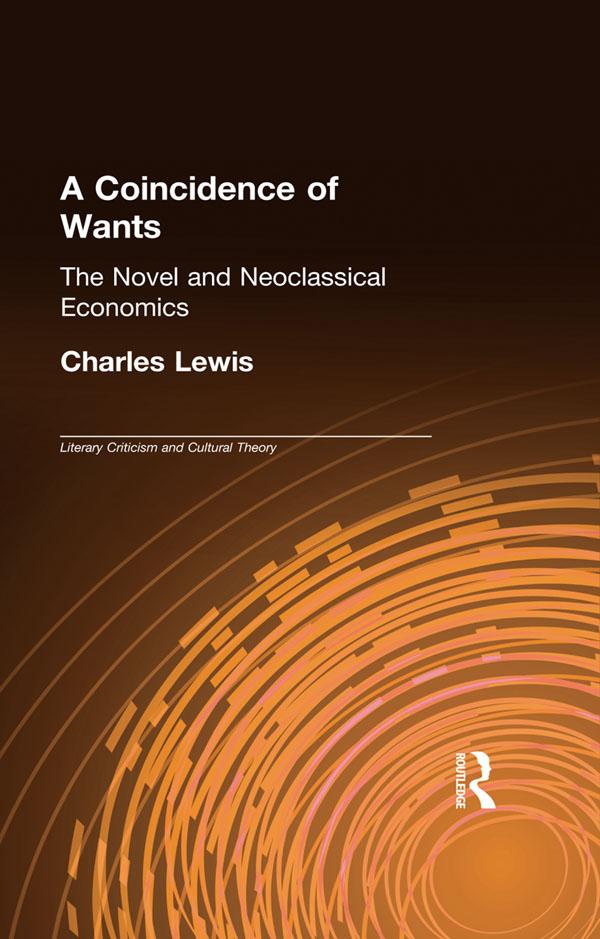
This interdisciplinary study examines four major British and American novels in view of key concepts from the mainstream tradition of neoclassical economics. Studies of the novel widely address its connections to capitalism, yet literary critics and theorists rarely make reference to neoclassical perspectives, which have held a key position in the formal analysis of the marketplace for over a century.
Lewis argues that this overlooked area of economic thought, with its emphasis on subjective value, individual agency, and utility maximization, points to a previously unrecognized and important coincidence of wants between economic and novelistic discourse. In each of the four readings, Lewis uses a single economic problem from neoclassical theory as a model for interpreting novelistic form and content as economic configurations. Topics include narrative deferral, detour, and return as a performance of capital formation and economic development in Daniel Defoe's Robinson Crusoe; the emergence of the creative, risk-taking entrepreneur in Mary Shelley's Frankenstein; the representation of money in the romantic realization of trade in Herman Melville's Moby Dick; and a consumer utility theory of naturalist desire and indifference in Theodore Dreiser's Sister Carrie.
Underscoring how neoclassical theory variously elaborates on and departs from other economic approaches and periods, the author also addresses the limitations of, and the possibilities of profitable exchange with, other critical frameworks for understanding literal and symbolic economies in narrative fiction more broadly.
Paga fácilmente con tarjeta, Klarna, Apple Pay o Google Pay. ¿No estás contento? Siempre tienes 14 días de garantía de devolución. Lee más en nuestros términos. Si tienes preguntas, escríbenos a hello@memmo.org.
Memmo hace que estudiar sea más fácil, estés donde estés. Aquí tienes tus libros de texto y herramientas de estudio inteligentes en un solo lugar: resúmenes, quizzes, podcasts y flashcards. Y también a Ted, tu compañero de estudio que responde a todo lo que te preguntes. Más de 50 000 estudiantes ya estudian aquí. Está hecho para que aprendas más rápido y te estreses menos.