
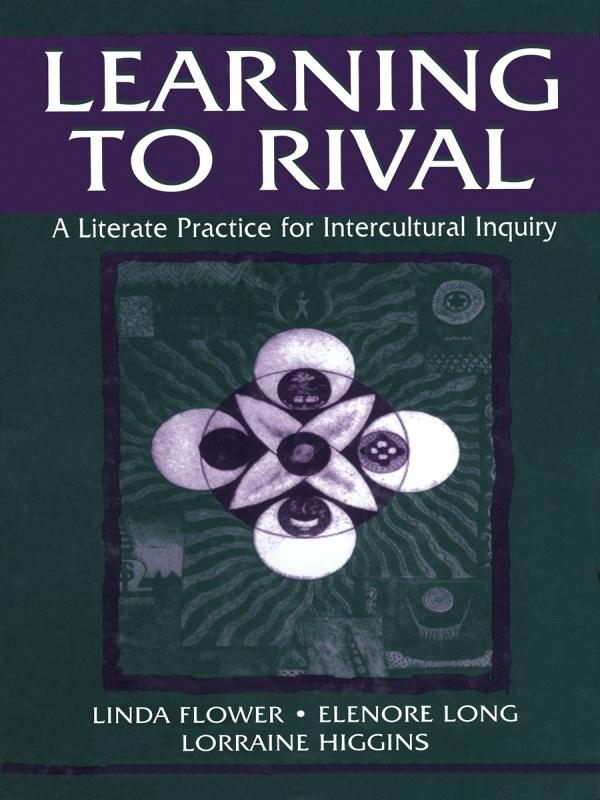
Learning to Rival tells the inside story of college and high school writers learning to "rival"--to actively seek rival hypotheses and negotiate alternative perspectives on charged questions. It shows how this interdisciplinary literate practice alters with the context of use and how, in learning to rival in school and out, students must often negotiate conflicts not apparent to instructors.
This study of the rival hypothesis stance--a powerful literate practice claimed by both humanities and science--initially posed two questions:
* how does the rival hypothesis stance define itself as a literate practice as we move across the boundaries of disciplines and genres, of school and community?
* how do learners crossing these boundaries interpret and use the family of literate practices, especially in situations that pose problems of intercultural understanding?
Over the course of this project with urban teenagers and minority college students, the rival hypothesis stance emerged as a generative and powerful tool for intercultural inquiry, posing in turn a new question: how can the practice of rivaling support the difficult and essential art of intercultural interpretation in education?
The authors present the story of a literate practice that moves across communities, as well as the stories of students who are learning to rival across the curriculum. Learning to Rival offers an active, strategic approach to multiculturalism, addressing how people negotiate and use difference to solve problems. In the spirit of John Dewey's experimental way of knowing, it presents a multifaceted approach to literacy research, combining contemporary research methods to show the complexity of rivaling as a literate practice and the way it is understood and used by a variety of writers.
As a resource for scholars, teachers, and administrators in writing across the curriculum studies, writing program administration, service learning, and community based projects, as well as literacy, rhetoric, and composition, this volume reveals how learning a new literate practice can force students to encounter and negotiate conflicts. It also provides a model of an intercultural inquiry that uses difference to understand a shared problem.
Paga fácilmente con tarjeta, Klarna, Apple Pay o Google Pay. ¿No estás contento? Siempre tienes 14 días de garantía de devolución. Lee más en nuestros términos. Si tienes preguntas, escríbenos a hello@memmo.org.
Memmo hace que estudiar sea más fácil, estés donde estés. Aquí tienes tus libros de texto y herramientas de estudio inteligentes en un solo lugar: resúmenes, quizzes, podcasts y flashcards. Y también a Ted, tu compañero de estudio que responde a todo lo que te preguntes. Más de 50 000 estudiantes ya estudian aquí. Está hecho para que aprendas más rápido y te estreses menos.