
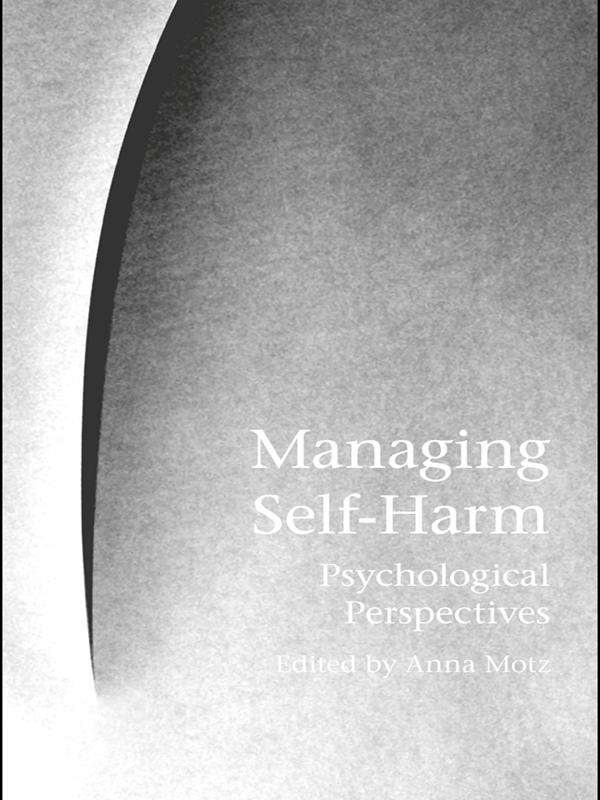
Self-harm often arises at moments of despair or emotional intensity, and its reasons are not necessarily available to the conscious mind. Managing Self-Harm explores the meaning and impact of self-harm, and the sense in which it is a language of the body. It is designed to help clinicians, people who self-harm and their families and carers to understand its causes, meaning and treatment.
Each chapter integrates theory with clinical illustration, enabling the direct experiences of those who self-harm to be heard and reflecting the populations that are most likely to self-harm. The contributors are drawn from a wide range of backgrounds, including clinical psychology, psychotherapy, group analysis and psychiatric nursing.
Areas of discussion include:
- self-harm and young people in foster care and residential settings
- self-harm in women’s secure services
- self-harm in people diagnosed with personality disorder
This book does not offer a prescription for self-harm cessation but rather describes therapeutic approaches to working with self-harm, and outlines the complex, subtle and meaningful interactions between those who engage in self-harm and those who seek to understand it. With a specialist interest in women’s self-harm, Managing Self-Harm will be essential reading for all mental health professionals, including clinical psychologists, psychotherapists, psychiatrists, psychiatric nurses and social workers.
Paga fácilmente con tarjeta, Klarna, Apple Pay o Google Pay. ¿No estás contento? Siempre tienes 14 días de garantía de devolución. Lee más en nuestros términos. Si tienes preguntas, escríbenos a hello@memmo.org.
Memmo hace que estudiar sea más fácil, estés donde estés. Aquí tienes tus libros de texto y herramientas de estudio inteligentes en un solo lugar: resúmenes, quizzes, podcasts y flashcards. Y también a Ted, tu compañero de estudio que responde a todo lo que te preguntes. Más de 50 000 estudiantes ya estudian aquí. Está hecho para que aprendas más rápido y te estreses menos.