
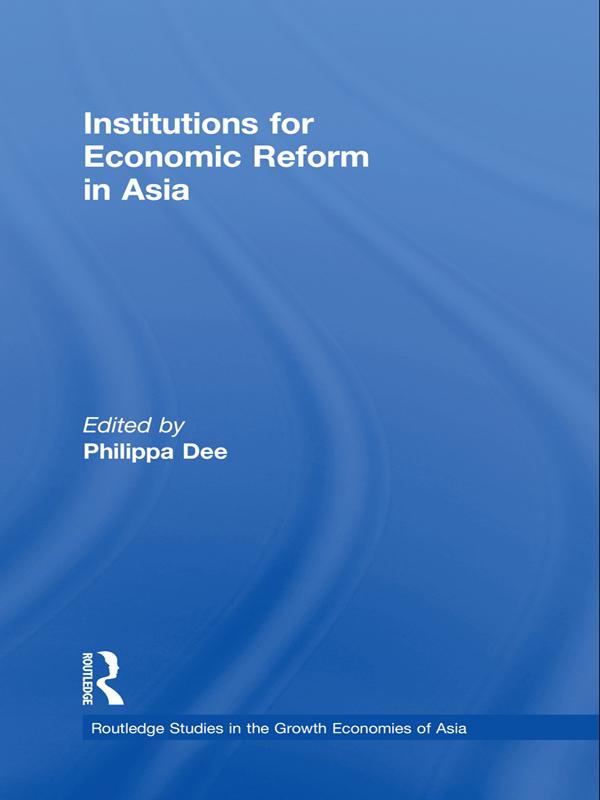
In the same way that no economy starts out with the best set of economic policies, no economy starts out with the best institutions to support the policy-making process. Instead, they inherit institutions that reflect their own unique culture and history. The task of structural reform has to be addressed, therefore, in the context of domestic economic and political institutions and processes.
Examining the nature of structural economic reform and the institutional circumstances in which it succeeds or is inhibited, this volume is less about the content of structural reform and more about how to get there. The chapters develop principles governing the types of institutions that are likely to assist the structural reform process, and then examine the application of those principles within a number of case studies. Finally, the volume presents some ideas about how regional cooperation could help to build and support those institutions that in turn support domestic structural reforms.
Consisting of theoretical chapters and country specific case studies, this book draws on experience with structural reform across a range of Asian economies at different stages of economic development. As such it will be of interest to students and scholars of Asian Economics and Development Economics.
Paga fácilmente con tarjeta, Klarna, Apple Pay o Google Pay. ¿No estás contento? Siempre tienes 14 días de garantía de devolución. Lee más en nuestros términos. Si tienes preguntas, escríbenos a hello@memmo.org.
Memmo hace que estudiar sea más fácil, estés donde estés. Aquí tienes tus libros de texto y herramientas de estudio inteligentes en un solo lugar: resúmenes, quizzes, podcasts y flashcards. Y también a Ted, tu compañero de estudio que responde a todo lo que te preguntes. Más de 50 000 estudiantes ya estudian aquí. Está hecho para que aprendas más rápido y te estreses menos.