
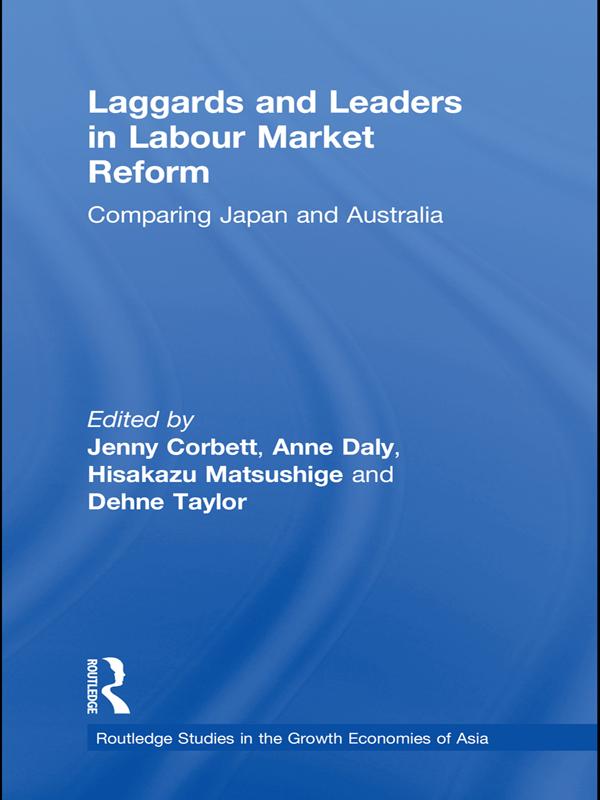
A flexible labour market is widely regarded as a key factor in encouraging economic growth and prosperity. In recent years some economies have successfully reformed their labour markets, making part-time and flexible hours easier, limiting the restrictive practices of trade unions, encouraging training and the enhancement of the skills of those in the labour market, coping with the changing age profile of the workforce and in other ways. Other economies have been less successful at labour market reform and continue to struggle with outdated structures and practices. This book discusses the key elements of labour market reform, contrasting a country where reforms have been successfully carried through, Australia, with a country where reforms have been less successful, Japan. At the same time, this book challenges the conventional view that Australia is the lucky country for all its workers – given the rising hours worked for those in work and the difficulties for young people entering the labour market. Both countries also face issues in terms of an ageing population, and policy challenges in the design of safety nets and pension provision. The book thereby demonstrates to analysts of labour market reform worldwide the key elements of successful labour market reform, and the consequential effects when the reforms are carried through, or not.
Paga fácilmente con tarjeta, Klarna, Apple Pay o Google Pay. ¿No estás contento? Siempre tienes 14 días de garantía de devolución. Lee más en nuestros términos. Si tienes preguntas, escríbenos a hello@memmo.org.
Memmo hace que estudiar sea más fácil, estés donde estés. Aquí tienes tus libros de texto y herramientas de estudio inteligentes en un solo lugar: resúmenes, quizzes, podcasts y flashcards. Y también a Ted, tu compañero de estudio que responde a todo lo que te preguntes. Más de 50 000 estudiantes ya estudian aquí. Está hecho para que aprendas más rápido y te estreses menos.