
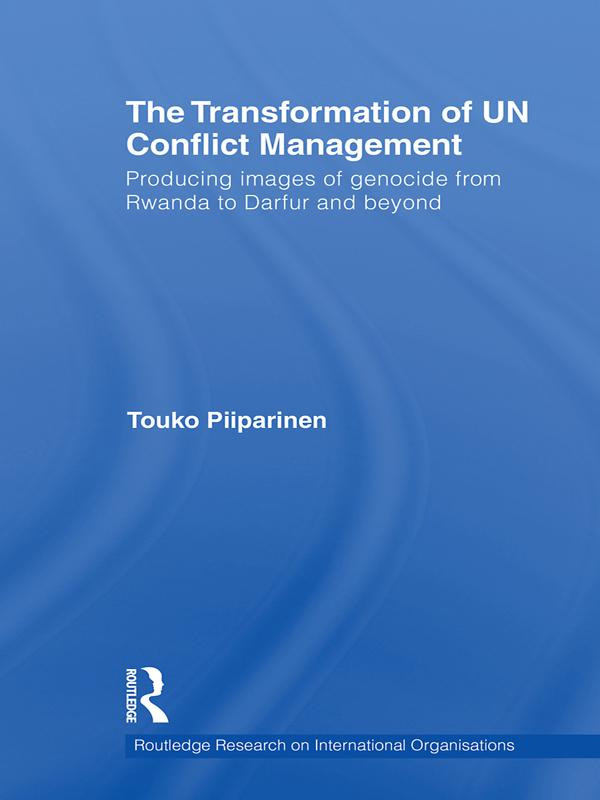
The world has vowed "Never again" in memory of the 800,000 Rwandans and other groups slaughtered by génocidaires. Yet, ever since the Holocaust, the international community has repeatedly betrayed its pledge, most notably in 1994 with regard to the Rwandan Tutsi, and again ten years later in Darfur.
This book examines how the UN failed to prevent or halt the Rwandan genocide: the most efficient mass killing in history. It offers a new explanation, focussing on the structure of the UN and four mechanisms which were pertinent to UN conflict management at that time: early warning; bureaucratic rationalisation; organisational learning; and Western normalisation. The author sees the Rwandan case as a ‘child of its time’, or a focal point in which the dysfunctions of the ailing conflict management mechanisms of the 1990s combined with devastating consequences. The book proceeds to examine the transformation of these mechanisms from Rwanda to Darfur - a development which is regarded as indicative of a wider tendency – or direction – in UN conflict management over the past ten years and in the foreseeable future.
This book will be of great interest to students and scholars of political science, international relations, ethnic politics, international organizations and conflict studies.
Paga fácilmente con tarjeta, Klarna, Apple Pay o Google Pay. ¿No estás contento? Siempre tienes 14 días de garantía de devolución. Lee más en nuestros términos. Si tienes preguntas, escríbenos a hello@memmo.org.
Memmo hace que estudiar sea más fácil, estés donde estés. Aquí tienes tus libros de texto y herramientas de estudio inteligentes en un solo lugar: resúmenes, quizzes, podcasts y flashcards. Y también a Ted, tu compañero de estudio que responde a todo lo que te preguntes. Más de 50 000 estudiantes ya estudian aquí. Está hecho para que aprendas más rápido y te estreses menos.