
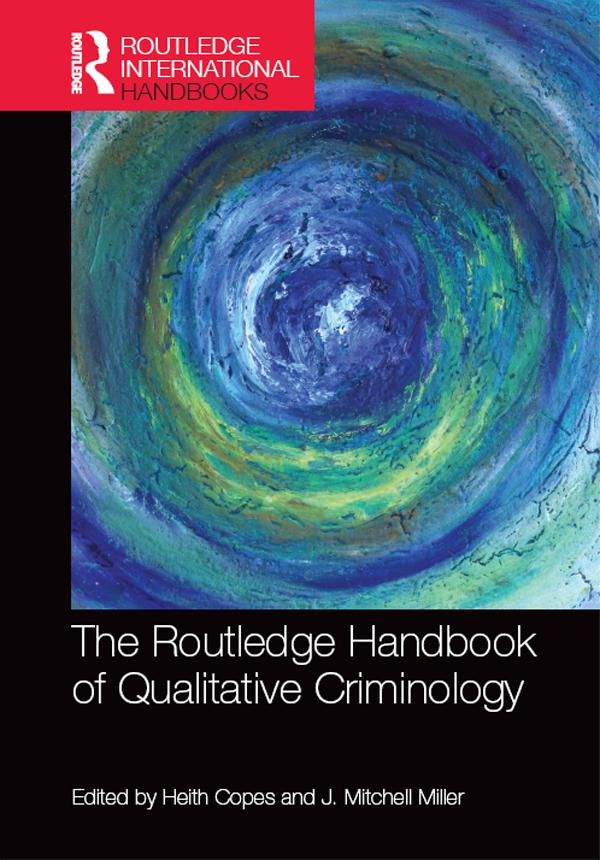
Despite illustrious origins dating to the 1920s, qualitative crime research has long been overshadowed by quantitative inquiry. After decades of limited use, there has been a notable resurgence in crime ethnography, naturalistic inquiry, and related forms of fieldwork addressing crime and related social control efforts. The Routledge Handbook of Qualitative Criminology signals this momentum as the first major reference work dedicated to crime ethnography and related fieldwork orientations. Synthesizing the foremost topics and issues in qualitative criminology into a single definitive work, the Handbook provides a "first-look" reference source for scholars and students alike.
The collection features twenty original chapters on leading qualitative crime research strategies, the complexities of collecting and analyzing qualitative data, and the ethical propriety of researching active criminals and incarcerated offenders. Contributions from both established luminaries and talented emerging scholars highlight the traditions and emerging trends in qualitative criminology through authoritative overviews and "lived experience" examples.
Comprehensive and current, The Routledge Handbook of Qualitative Criminology promises to be a sound reference source for academics, students and practitioners as ethnography and fieldwork realize continued growth throughout the 21st Century.
Paga fácilmente con tarjeta, Klarna, Apple Pay o Google Pay. ¿No estás contento? Siempre tienes 14 días de garantía de devolución. Lee más en nuestros términos. Si tienes preguntas, escríbenos a hello@memmo.org.
Memmo hace que estudiar sea más fácil, estés donde estés. Aquí tienes tus libros de texto y herramientas de estudio inteligentes en un solo lugar: resúmenes, quizzes, podcasts y flashcards. Y también a Ted, tu compañero de estudio que responde a todo lo que te preguntes. Más de 50 000 estudiantes ya estudian aquí. Está hecho para que aprendas más rápido y te estreses menos.