
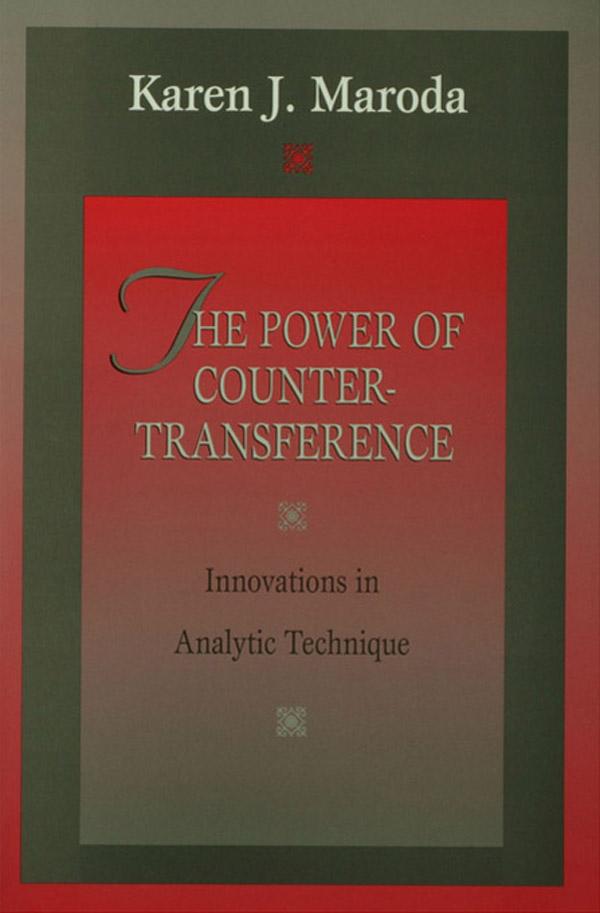
A signpost of the relational turn in contemporary psychoanalysis, Karen Maroda's The Power of Countertransference, published in 1991, is perhaps the first systematic effort to integrate the need for mutual emotional exchanges, which may include the analyst's own self-disclosures, into an interactive model of psychoanalytic practice. Maroda's call for emotional honesty and affective self-disclosure had an immediate impact on the field and led Harold Searles to comment, "If we follow the example set by Maroda, we shall be minimally likely to 'act in' our emotions in our sessions with our patients. They will benefit greatly as a result; we practitioners shall benefit; and the profession of psychoanalysis and psychoanalytic therapy will become healthier and stronger than it is at present." This revised edition includes a new Foreword by Lewis Aron and an Afterword in which Maroda clarifies her own position and comments on the evolution of psychoanalytic technique since the publication of The Power of Countertransference.
Paga fácilmente con tarjeta, Klarna, Apple Pay o Google Pay. ¿No estás contento? Siempre tienes 14 días de garantía de devolución. Lee más en nuestros términos. Si tienes preguntas, escríbenos a hello@memmo.org.
Memmo hace que estudiar sea más fácil, estés donde estés. Aquí tienes tus libros de texto y herramientas de estudio inteligentes en un solo lugar: resúmenes, quizzes, podcasts y flashcards. Y también a Ted, tu compañero de estudio que responde a todo lo que te preguntes. Más de 50 000 estudiantes ya estudian aquí. Está hecho para que aprendas más rápido y te estreses menos.