
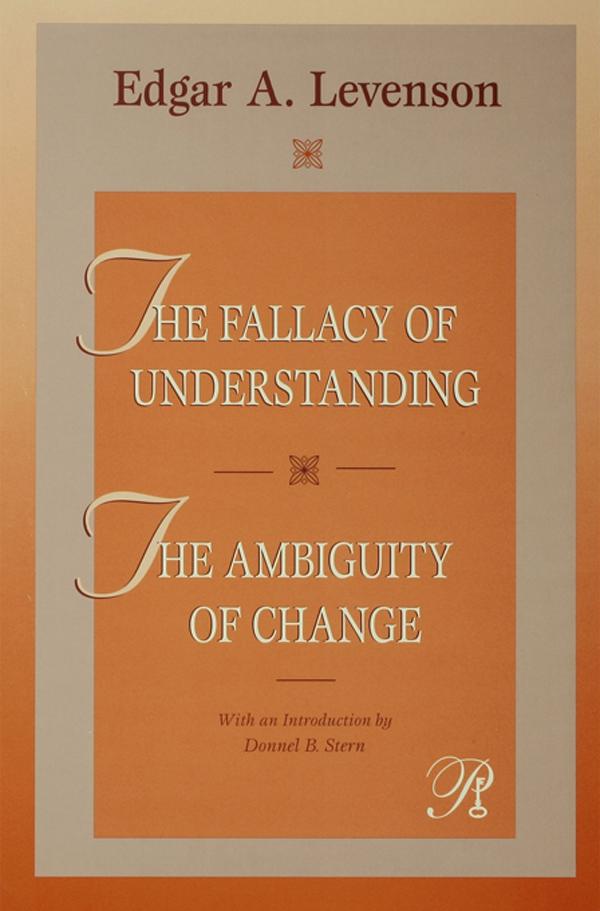
In The Fallacy of Understanding (1972) and The Ambiguity of Change (1983), Edgar Levenson elaborated the many ways in which the psychoanalyst and the patient interact - unconsciously, continuously, inevitably. For Levenson, it was impossible for the analyst not to interact with the patient, and the therapeutic power of analysis derived from the analyst's ability to step back from the interactive embroilment (and the mutual enactments to which it led) and to reflect with the patient on what each was doing to, and with, the other.
Invariably, Levenson found, the analyst-analysand interaction reprised patterns of experience that typified the analysand's early family relationships. The reconceptualization of the analyst-analysand relationship and of the manner in which the analytic process unfolded would become foundational to contemporary interpersonal and relational approaches to psychoanalysis and psychotherapy. But Levenson's perspective was revolutionary at the time of its initial formulation in The Fallacy of Understanding and remained so at the time of its fuller elaboration in The Ambiguity of Change.
The Analytic Press is pleased to reprint within the Psychoanalysis in a New Key Book Beries two works that have proven influential in the realignment of psychoanalytic thought and practice away from Freudian drive theory and toward a contemporary appreciation of clinical process in its interactive, enactive, and participatory dimensions. Newly introduced by series editor Donnel Stern, The Fallacy of Understanding and The Ambiguity of Change are richly deserving of the designation "contemporary classics" of psychoanalysis.
Paga fácilmente con tarjeta, Klarna, Apple Pay o Google Pay. ¿No estás contento? Siempre tienes 14 días de garantía de devolución. Lee más en nuestros términos. Si tienes preguntas, escríbenos a hello@memmo.org.
Memmo hace que estudiar sea más fácil, estés donde estés. Aquí tienes tus libros de texto y herramientas de estudio inteligentes en un solo lugar: resúmenes, quizzes, podcasts y flashcards. Y también a Ted, tu compañero de estudio que responde a todo lo que te preguntes. Más de 50 000 estudiantes ya estudian aquí. Está hecho para que aprendas más rápido y te estreses menos.