
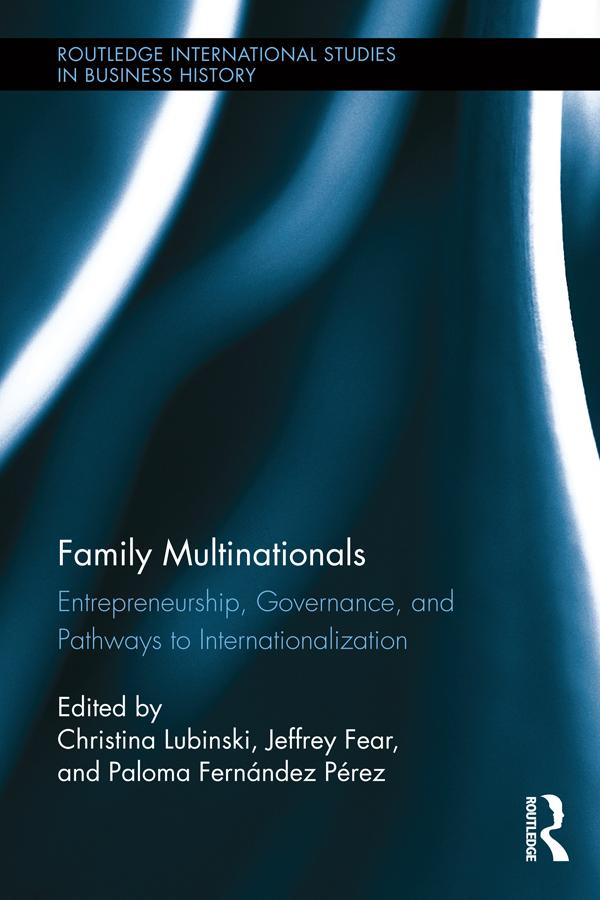
In contrast to widespread assessments that family enterprises lack sufficient resources and capabilities to go global, many family companies are competing successfully in an increasingly globalized business environment. Worldwide, a large number of thriving multinationals are still family-owned and/or under family control. While there is abundant literature on the phenomenon of globalization from many different disciplines, neither the literature on multinationals nor the growing field of family business studies have systematically investigated family multinationals yet. This volume is one of the first to deal explicitly with family multinationals and the role of the family in internationalization. It situates itself at the crossroads of internationalization studies on the one hand and family business research on the other.
Why do families continue to play such a large role in some of the most prominent firms in emerging and mature economies? How did they manage to maintain ownership control, yet divest of unrelated business ventures? How did they internationalize yet maintain control? This book identifies the idiosyncratic strategies and structures of family multinationals in different countries and at different points in time. A comparative historical and case study approach allows us to explore the role of the family through the firms’ various internationalization pathways and understand long-term developments and path dependencies.
Paga fácilmente con tarjeta, Klarna, Apple Pay o Google Pay. ¿No estás contento? Siempre tienes 14 días de garantía de devolución. Lee más en nuestros términos. Si tienes preguntas, escríbenos a hello@memmo.org.
Memmo hace que estudiar sea más fácil, estés donde estés. Aquí tienes tus libros de texto y herramientas de estudio inteligentes en un solo lugar: resúmenes, quizzes, podcasts y flashcards. Y también a Ted, tu compañero de estudio que responde a todo lo que te preguntes. Más de 50 000 estudiantes ya estudian aquí. Está hecho para que aprendas más rápido y te estreses menos.