
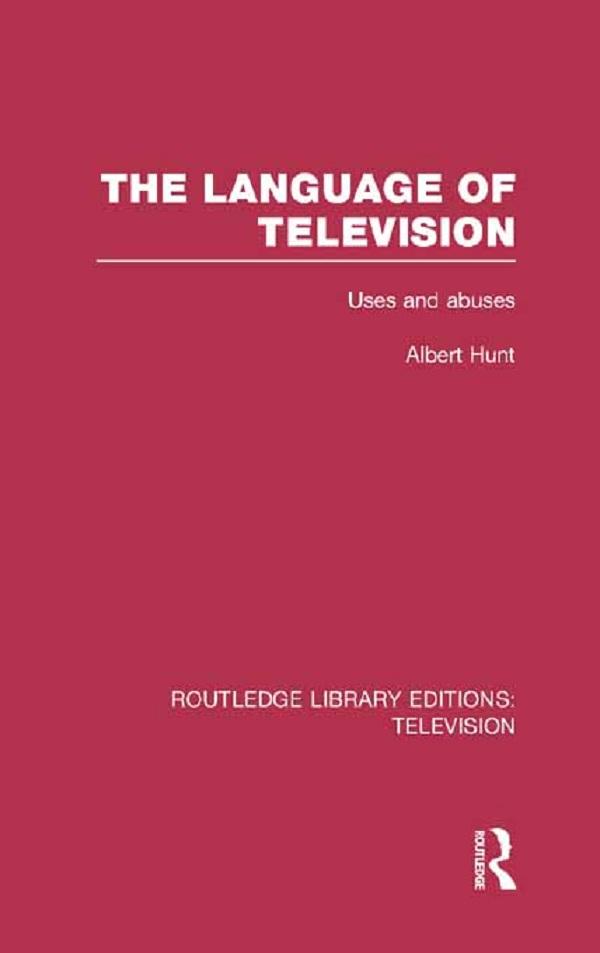
The first part of this book assesses how television presents viewers with information - contrasting the ‘official reality’ of news and current affairs programmes with the anarchic view of the world put out by such as Morecambe and Wise and the two Ronnies. It challenges the politics of programme schedules and takes care to consider the language used in programs designed for different purposes.
The second, inspiring part contains accounts of three of the author's collaborative video projects which aimed to use the medium of video storytelling to access a different way of teaching. The third and most polemical part of the book explores more about education in relation to television and video. Originally published in 1981, it is a book about the way that television, through massive and constant reinforcement, made its own language the only language; and it presents the attempts – instructive, hilarious, occasionally quite touching – made by the author and students to discover other possible languages that television might use.
Paga fácilmente con tarjeta, Klarna, Apple Pay o Google Pay. ¿No estás contento? Siempre tienes 14 días de garantía de devolución. Lee más en nuestros términos. Si tienes preguntas, escríbenos a hello@memmo.org.
Memmo hace que estudiar sea más fácil, estés donde estés. Aquí tienes tus libros de texto y herramientas de estudio inteligentes en un solo lugar: resúmenes, quizzes, podcasts y flashcards. Y también a Ted, tu compañero de estudio que responde a todo lo que te preguntes. Más de 50 000 estudiantes ya estudian aquí. Está hecho para que aprendas más rápido y te estreses menos.