
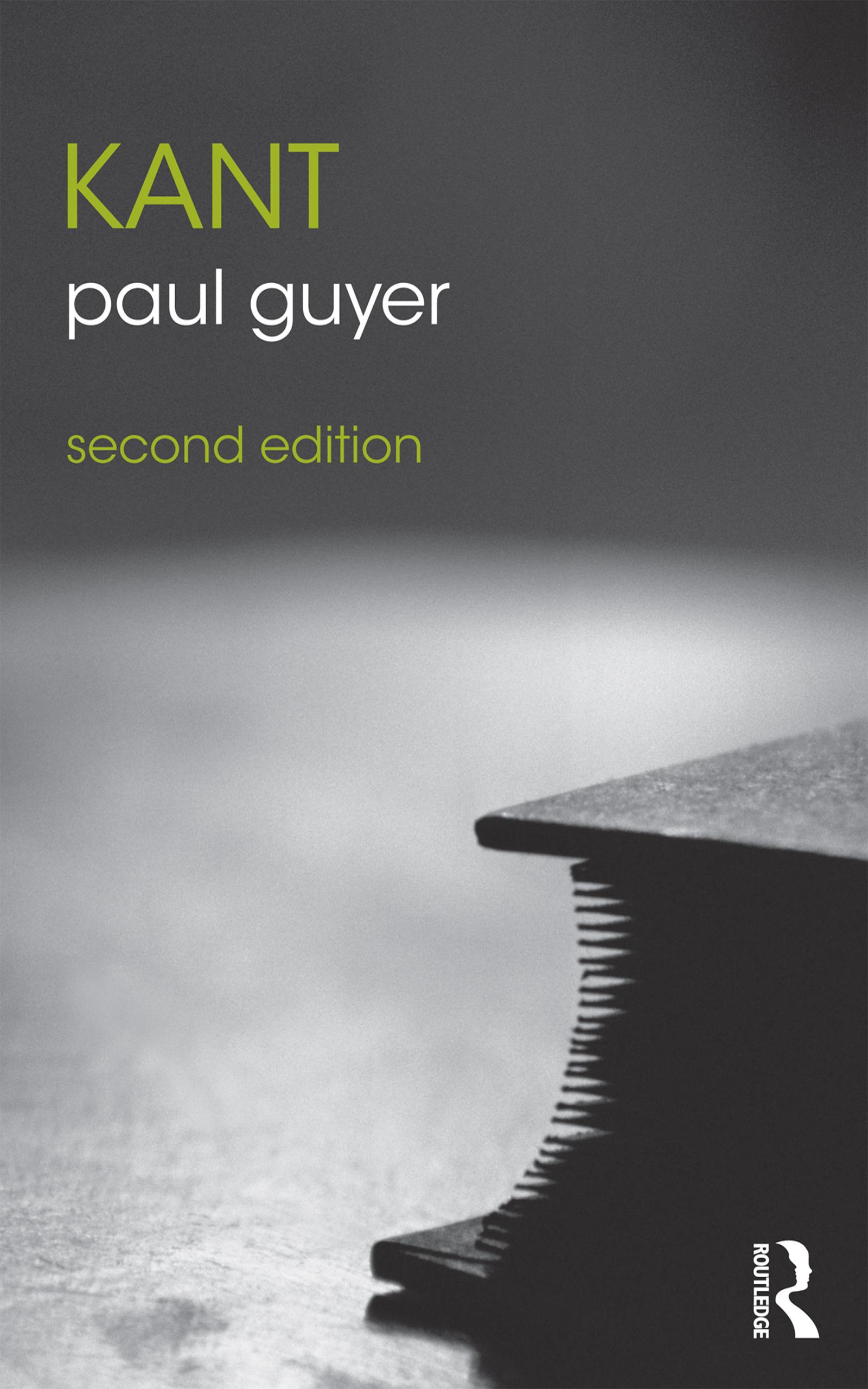
In this updated edition of his outstanding introduction to Kant, Paul Guyer uses Kant’s central conception of autonomy as the key to his thought.
Beginning with a helpful overview of Kant’s life and times, Guyer introduces Kant’s metaphysics and epistemology, carefully explaining his arguments about the nature of space, time and experience in his most influential but difficult work, The Critique of Pure Reason. He offers an explanation and critique of Kant’s famous theory of transcendental idealism and shows how much of Kant’s philosophy is independent of this controversial doctrine.
He then examines Kant’s moral philosophy, his celebrated ‘categorical imperative’ and his theories of duty, freedom of will and political rights. This section of the work has been substantially revised to clarify the relation between Kant’s conceptions of "internal" and "external" freedom. In his treatments of Kant’s aesthetics and teleology, Guyer focuses on their relation to human freedom and happiness. Finally, he considers Kant’s view that the development of human autonomy is the only goal that we can conceive for both natural and human history.
Including a chronology, glossary, chapter summaries and up-to-date further reading, Kant, second edition is an ideal introduction to this demanding yet pivotal figure in the history of philosophy, and essential reading for all students of philosophy.
Paga fácilmente con tarjeta, Klarna, Apple Pay o Google Pay. ¿No estás contento? Siempre tienes 14 días de garantía de devolución. Lee más en nuestros términos. Si tienes preguntas, escríbenos a hello@memmo.org.
Memmo hace que estudiar sea más fácil, estés donde estés. Aquí tienes tus libros de texto y herramientas de estudio inteligentes en un solo lugar: resúmenes, quizzes, podcasts y flashcards. Y también a Ted, tu compañero de estudio que responde a todo lo que te preguntes. Más de 50 000 estudiantes ya estudian aquí. Está hecho para que aprendas más rápido y te estreses menos.