
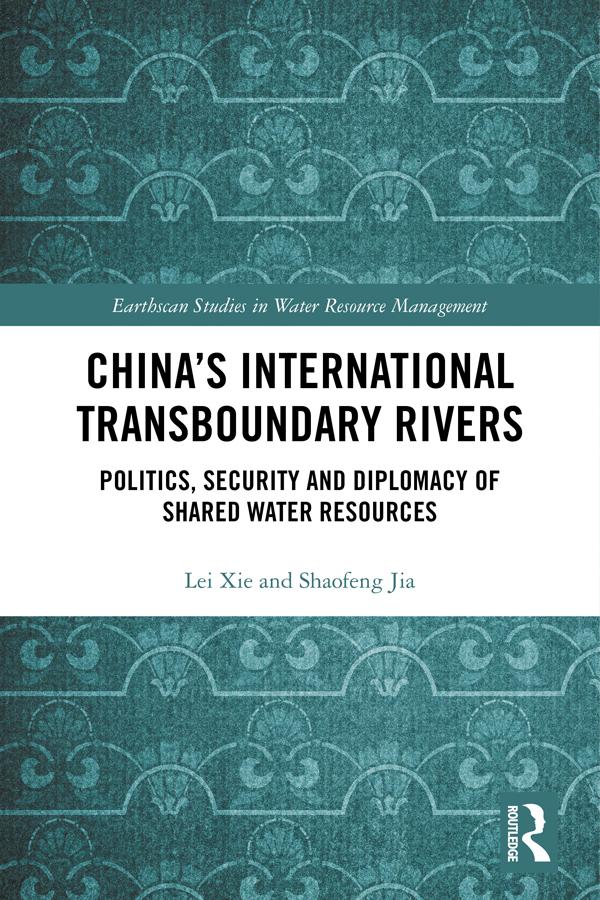
China has forty major transboundary watercourses with neighbouring countries, and has frequently been accused of harming its downstream neighbours through its domestic water management policies, such as the construction of dams for hydropower. This book provides an understanding of water security in Asia by investigating how shared water resources affect China’s relationships with neighbouring countries in South, East, Southeast and Central Asia.
Since China is an upstream state on most of its shared transboundary rivers, the country’s international water policy is at the core of Asia’s water security. These water disputes have had strong implications for China’s interstate relations, and also influenced its international water policy alongside domestic concerns over water resource management.
This book investigates China’s policy responses to domestic water crises and examines China’s international water policy as well as its strategy in dealing with international cooperation. The authors describe the key elements of water diplomacy in Asia which demonstrate varying degrees of effectiveness of environmental agreements. It shows how China has established various institutional arrangements with neighbouring countries, primarily in the form of bilateral agreements over hydrological data exchange. Detailed case studies are included of the Mekong, Brahmaputra, Ili and Amur rivers.
Paga fácilmente con tarjeta, Klarna, Apple Pay o Google Pay. ¿No estás contento? Siempre tienes 14 días de garantía de devolución. Lee más en nuestros términos. Si tienes preguntas, escríbenos a hello@memmo.org.
Memmo hace que estudiar sea más fácil, estés donde estés. Aquí tienes tus libros de texto y herramientas de estudio inteligentes en un solo lugar: resúmenes, quizzes, podcasts y flashcards. Y también a Ted, tu compañero de estudio que responde a todo lo que te preguntes. Más de 50 000 estudiantes ya estudian aquí. Está hecho para que aprendas más rápido y te estreses menos.