
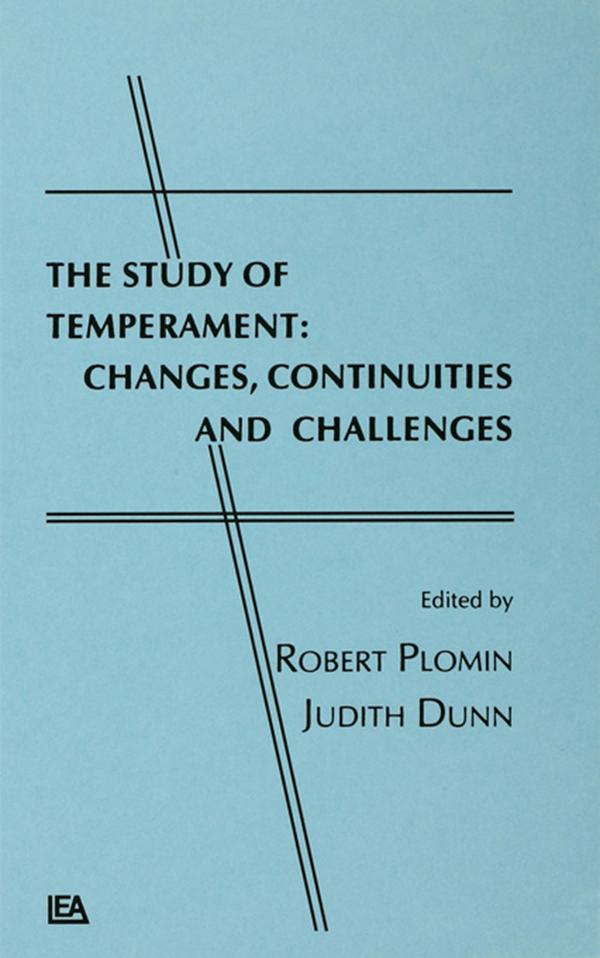
First Published in 1986. The modern history of temperament research began in the late 1950s with the New York Longitudinal Study. Twenty-five years later, temperament has become a major focus of research on early developing emotional and social traits. The impetus for this growth in temperament research stems from the merging of several shifts in child development research: from a view of the child as passive to a model of the child as an active, transacting partner with the environment; increasing interest in individual differences in development; an expansion of research on emotional and social development; and a clear change from an exclusive reliance on environmental explanations of developmental differences to a more balanced perspective that recognizes the possibility of biological as well as environmental influences. Most stimulating is the multidisciplinary flavor of temperament research-clinicians, infancy researchers, cultural anthropologists, and behavioral geneticists have, each for their own reasons, been drawn to the study of temperament. Each of these fields is represented in the present volume, which provides the first overview of the growing field of temperament.
Paga fácilmente con tarjeta, Klarna, Apple Pay o Google Pay. ¿No estás contento? Siempre tienes 14 días de garantía de devolución. Lee más en nuestros términos. Si tienes preguntas, escríbenos a hello@memmo.org.
Memmo hace que estudiar sea más fácil, estés donde estés. Aquí tienes tus libros de texto y herramientas de estudio inteligentes en un solo lugar: resúmenes, quizzes, podcasts y flashcards. Y también a Ted, tu compañero de estudio que responde a todo lo que te preguntes. Más de 50 000 estudiantes ya estudian aquí. Está hecho para que aprendas más rápido y te estreses menos.
También te podría gustar
Comprar el libro0