
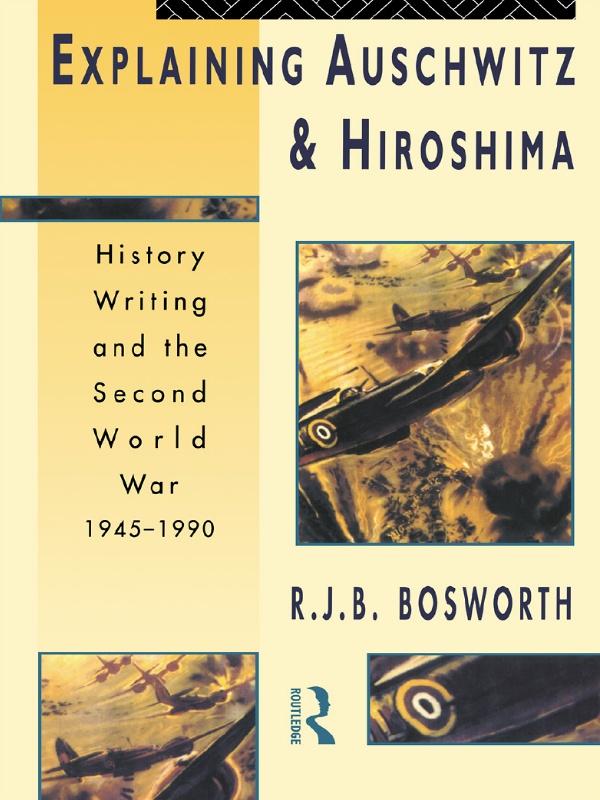
Explaining Auschwitz and Hiroshima explores the way in which the main combatant societies of the Second World War have historicised that experience. Since 1945, debates in Germany about `the past that would not fade away' have been reasonably well-known. But in this book, Richard Bosworth maintains that Germany is not unique. He argues that in Britain, France, Italy, the USSR and Japan, as well as in Germany the traumatic history of the `long Second World War' has remained crucial to the culture and the politics of post-war societies. Each has felt a compelling need to interpret this past event and thus to `explain' `Auschwitz' and `Hiroshima'. Bosworth explores the bitter controversies that have developed around a particular interpretation of the war, such as disputes over A.J.P. Taylor's, Origins of the Second World War , Marcel Ophul's film, The Sorrow and the Pity , Renzo De Felice's biography of Mussolini in the 1970s or in post- Glasnost debates about the historiographies of the Commonwealth of Independent States. Richard Bosworth's book is a wide-ranging and thoughtful excursion into comparative history.
Paga fácilmente con tarjeta, Klarna, Apple Pay o Google Pay. ¿No estás contento? Siempre tienes 14 días de garantía de devolución. Lee más en nuestros términos. Si tienes preguntas, escríbenos a hello@memmo.org.
Memmo hace que estudiar sea más fácil, estés donde estés. Aquí tienes tus libros de texto y herramientas de estudio inteligentes en un solo lugar: resúmenes, quizzes, podcasts y flashcards. Y también a Ted, tu compañero de estudio que responde a todo lo que te preguntes. Más de 50 000 estudiantes ya estudian aquí. Está hecho para que aprendas más rápido y te estreses menos.
También te podría gustar
Comprar el libro0