
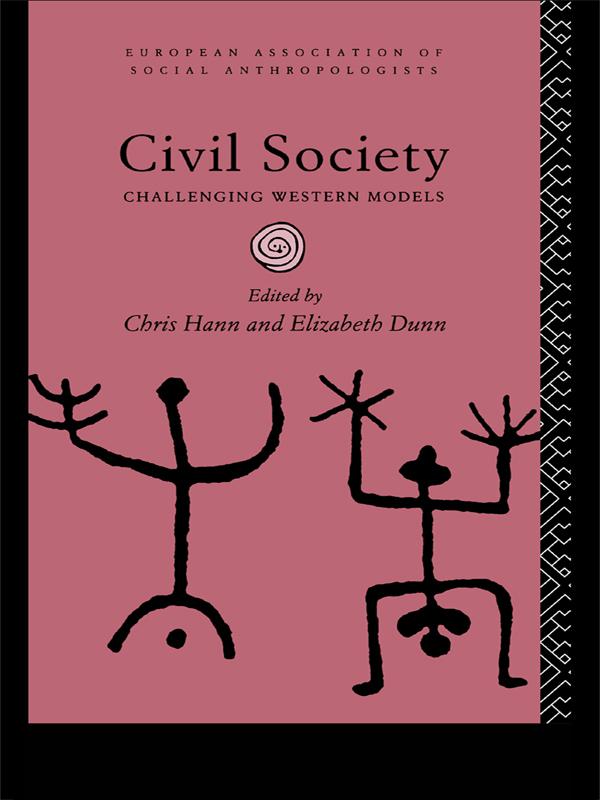
Between kinship ties on the one hand and the state on the other, human beings experience a diversity of social relationships and groupings which in modern western thought have come to be gathered under the label 'civil society'. A liberal-individualist model of civil society has become fashionable in recent years, but what can such a term mean in the late twentieth century?
Civil Society argues that civil society should not be studied as a separate, 'private' realm clearly separated in opposition to the state; nor should it be confined to the institutions of the 'voluntary' or 'non-governmental' sector. A broader understanding of civil society involves the investigation of everyday social practices, often elusive power relations and the shared moralities that hold communities together. By drawing on case materials from a range of contemporary societies, including the US, Britain, four of the former Communist countries of Eastern Europe, Turkey and the Middle and Far East, Civil Society demonstrates what anthropology contributes to debates taking place throughout the social sciences; adding up to an exciting renewal of the agenda for political anthropology.
Paga fácilmente con tarjeta, Klarna, Apple Pay o Google Pay. ¿No estás contento? Siempre tienes 14 días de garantía de devolución. Lee más en nuestros términos. Si tienes preguntas, escríbenos a hello@memmo.org.
Memmo hace que estudiar sea más fácil, estés donde estés. Aquí tienes tus libros de texto y herramientas de estudio inteligentes en un solo lugar: resúmenes, quizzes, podcasts y flashcards. Y también a Ted, tu compañero de estudio que responde a todo lo que te preguntes. Más de 50 000 estudiantes ya estudian aquí. Está hecho para que aprendas más rápido y te estreses menos.