
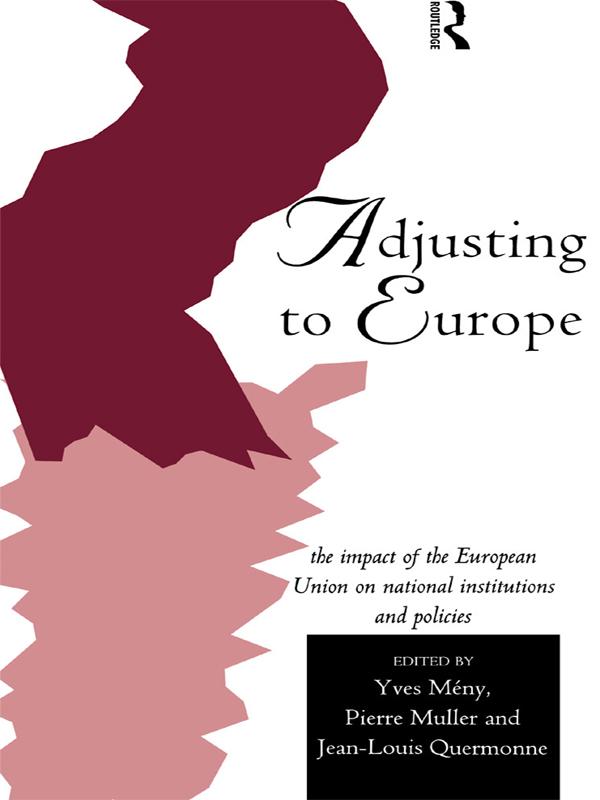
The European Union is paradoxical: it is not a state, yet it performs many traditional functions of the state. Its regulatory powers are immense but its redistributive functions are negligible; its decisions penetrate all aspects of economic and social life, yet Brussels has no local administration or tribunals, no controllers capable of guaranteeing the correct and faithful implementation of the regulations or objectives which frame European policies. Adjusting to Europe explores the means through which this paradox is confronted. It examines the nature and modalities of policy-making at Community level and discusses the implications of the specific nature of European institiutions for bargaining group mobilization and policy style. It then studies how the three major nation states have adjusted their policy processes and institutions to the European challenges. Finally, it considers the impact of community decisions in three areas: industrial, competition and social policy.
Paga fácilmente con tarjeta, Klarna, Apple Pay o Google Pay. ¿No estás contento? Siempre tienes 14 días de garantía de devolución. Lee más en nuestros términos. Si tienes preguntas, escríbenos a hello@memmo.org.
Memmo hace que estudiar sea más fácil, estés donde estés. Aquí tienes tus libros de texto y herramientas de estudio inteligentes en un solo lugar: resúmenes, quizzes, podcasts y flashcards. Y también a Ted, tu compañero de estudio que responde a todo lo que te preguntes. Más de 50 000 estudiantes ya estudian aquí. Está hecho para que aprendas más rápido y te estreses menos.
También te podría gustar
Comprar el libro0