
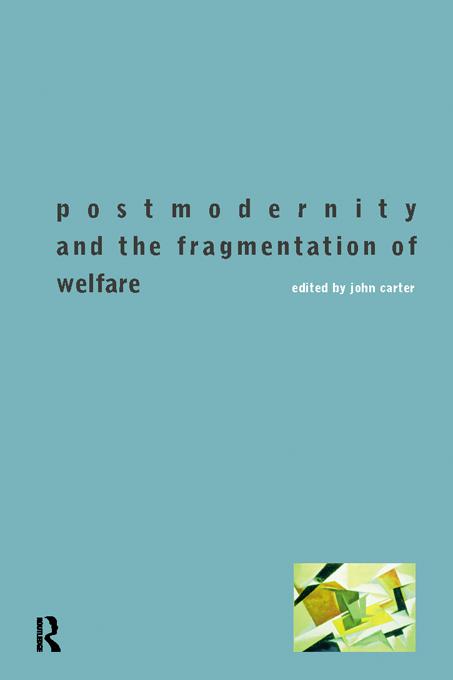
Postmodern ideas have been vastly influential in the social sciences and beyond. However, their impact on the study of social policy has been minimal. Postmodernity and the Fragmentation of Welfare analyses the potential for a postmodern or cultural turn in welfare as it treats postmodernity as an evolving canon -from the seminal works of Baudrillard, Foucault and Lyotard, through to recent theories of the 'risk society'.
Already disorientated by globalisation, new technologies and the years of new right ascendancy, welfare faces a significant challenge in the postmodern. It suggests that, rather than universality and state provision, the new social policy will be consumerised and fragmented -a welfare state of ambivalence.
With contributions from authors coming from a variety of fields offering very different perspectives on postmodernity and welfare Postmodernity and the Fragmentation of Welfare also keeps social policy's intellectual inheritance in view. By exploring ways in which theorisations of postmodernity might improve understanding of welfare issues in the 1990s and assessing the relevance of theories of diversity and difference to mainstream and critical social policy traditions, this book will be and essential text for all students of social policy, social administration, social work and sociology.
Paga fácilmente con tarjeta, Klarna, Apple Pay o Google Pay. ¿No estás contento? Siempre tienes 14 días de garantía de devolución. Lee más en nuestros términos. Si tienes preguntas, escríbenos a hello@memmo.org.
Memmo hace que estudiar sea más fácil, estés donde estés. Aquí tienes tus libros de texto y herramientas de estudio inteligentes en un solo lugar: resúmenes, quizzes, podcasts y flashcards. Y también a Ted, tu compañero de estudio que responde a todo lo que te preguntes. Más de 50 000 estudiantes ya estudian aquí. Está hecho para que aprendas más rápido y te estreses menos.