
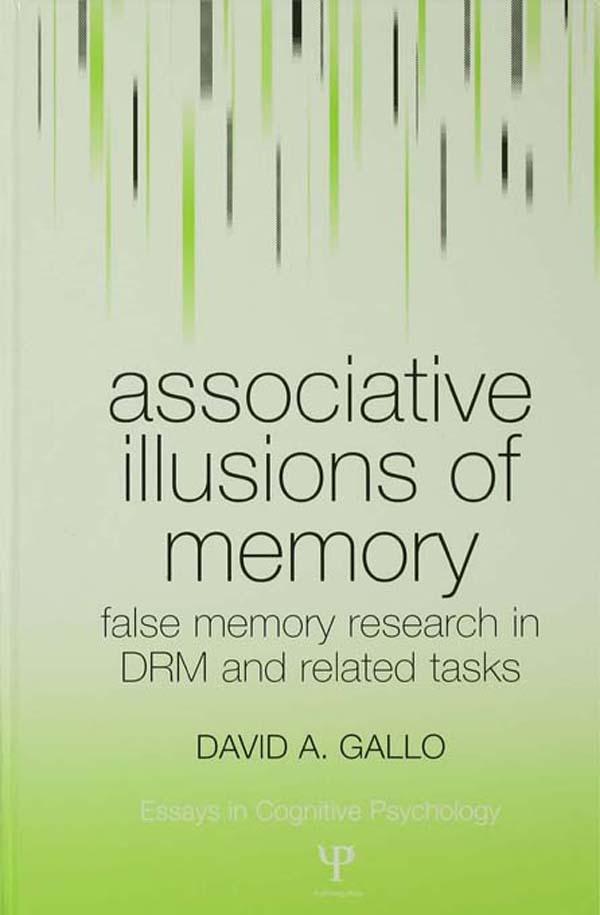
The last decade has seen a flurry of experimental research into the neurocognitive underpinnings of illusory memories. Using simple materials and tests (e.g., recalling words or pictures), methods such as the famed Deese-Roediger-McDermott (DRM) task have attracted considerable attention. These tasks elicit false memories of nonstudied events that are vivid, long lasting, and difficult to consciously avoid. Additional research shows that these memory illusions are fundamentally related to more complex memory distortions. As a result, this rapidly expanding literature has generated a great deal of excitement - and even some controversy - in contemporary psychology.
Associative Illusions of Memory provides an ambitious overview of this research area. Starting with the historical roots and major theoretical trends, this book exhaustively reviews the most recent studies by cognitive psychologists, neuropsychologists, and cognitive neuroscientists. The strengths and limits of various experimental techniques are outlined, and the large body of existing data is meaningfully distilled into a few core theoretical concepts.
This book highlights the malleability of memory, as well as the strategies and situations that can help us avoid false memories. Throughout the review, it is argued that these basic memory illusions contribute to a deeper understanding of how human memory works.
Paga fácilmente con tarjeta, Klarna, Apple Pay o Google Pay. ¿No estás contento? Siempre tienes 14 días de garantía de devolución. Lee más en nuestros términos. Si tienes preguntas, escríbenos a hello@memmo.org.
Memmo hace que estudiar sea más fácil, estés donde estés. Aquí tienes tus libros de texto y herramientas de estudio inteligentes en un solo lugar: resúmenes, quizzes, podcasts y flashcards. Y también a Ted, tu compañero de estudio que responde a todo lo que te preguntes. Más de 50 000 estudiantes ya estudian aquí. Está hecho para que aprendas más rápido y te estreses menos.
También te podría gustar
Comprar el libro0