
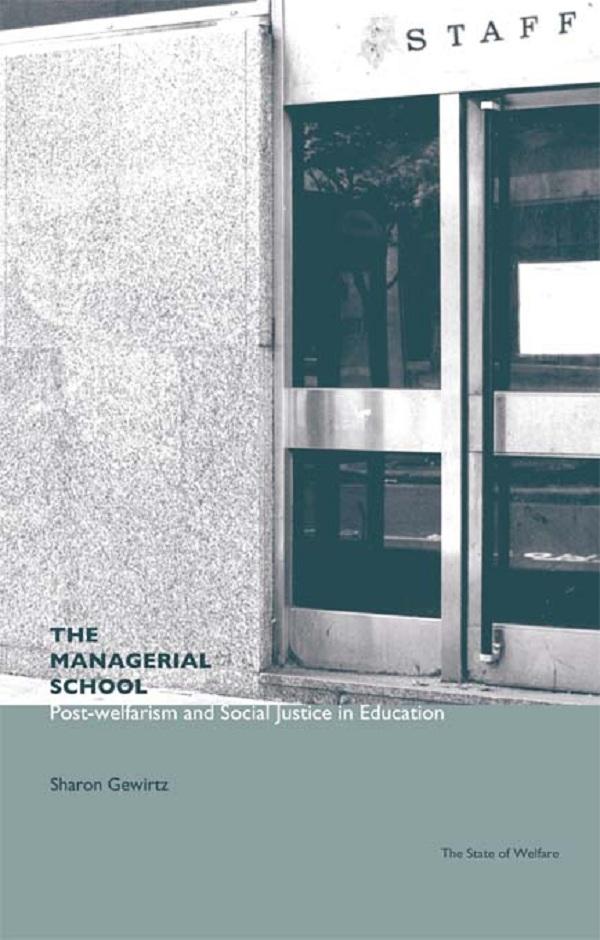
The relationship between welfare and the state has undergone a sustained process of reconfiguration over the past two decades and managerialism has played a key role in this process. In education, parents are now seen as consumers and schools as small businesses, their income dependent on their success in attracting customers within competitive local 'markets'.
At the same time, management practices borrowed from business, such as target setting and performance monitoring, now play a key role in regulating schools.
What kinds of schools are the reforms producing? What impact are they having on school culture and values? What are the social justice implications of applying a business model to the provision of schooling?
In The Managerial School Sharon Gerwirtz draws on in-depth interviews with teachers in a range of secondary schools and close observation of school practices to try to answer these questions.Through a comparison of Conservative and New Labour policies, she argues that New Labour's 'third way' for education is a contradictory mix of neo-liberal, authoritarian and humanistic strands that is not in any real sense a new educational settlement.
This empirically based account of over a decade of education reform offers a unique insight into the effects of managerialism on schools and a hard-hitting analysis of the inherent tensions in a system that undoubtedly perpetrates social injustice.
Paga fácilmente con tarjeta, Klarna, Apple Pay o Google Pay. ¿No estás contento? Siempre tienes 14 días de garantía de devolución. Lee más en nuestros términos. Si tienes preguntas, escríbenos a hello@memmo.org.
Memmo hace que estudiar sea más fácil, estés donde estés. Aquí tienes tus libros de texto y herramientas de estudio inteligentes en un solo lugar: resúmenes, quizzes, podcasts y flashcards. Y también a Ted, tu compañero de estudio que responde a todo lo que te preguntes. Más de 50 000 estudiantes ya estudian aquí. Está hecho para que aprendas más rápido y te estreses menos.