
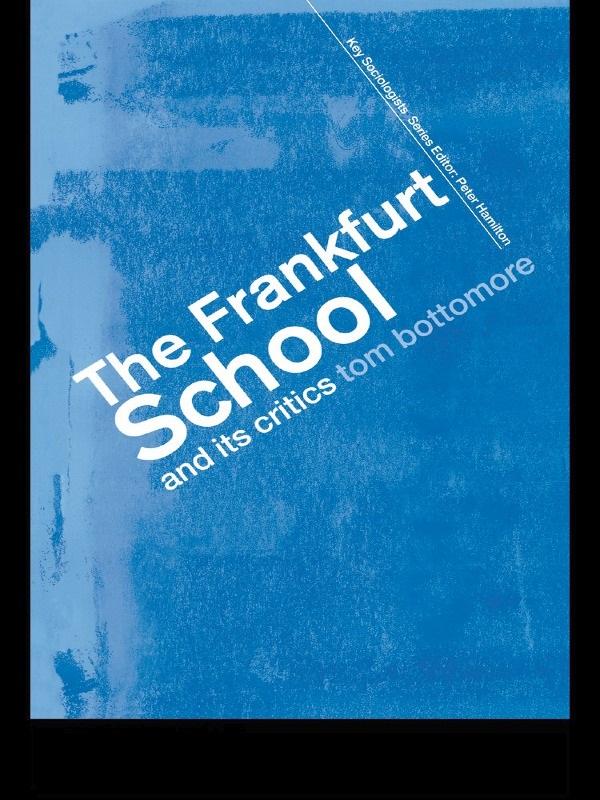
The Institute of Social Research, from which the Frankfurt School developed, was founded in the early years of the Weimar Republic. It survived the Nazi era in exile, to become an important centre of social theory in the postwar era. Early members of the school, such as Adorno, Horkheimer and Marcuse, developed a form of Marxist theory known as Critical Theory, which became influential in the study of class, politics, culture and ideology. The work of more recent members, and in particular Habermas, has received wide attention throughout Europe and North America.
Tom Bottomore's study takes a new and controversial look at the contributions of the Frankfurt School to modern sociology, examining several issues not previously discussed elsewhere. He discusses the neglect of history and political economy by the critical theorists, and considers the relationship of the later Frankfurt School to the radical movements of the 1960s and the present time. His critical analysis makes the school's writers accessible, through an assessment of their work and an exploration of the relationship of Critical Theory to other forms of sociological thought, especially positivism and structuralism.
Paga fácilmente con tarjeta, Klarna, Apple Pay o Google Pay. ¿No estás contento? Siempre tienes 14 días de garantía de devolución. Lee más en nuestros términos. Si tienes preguntas, escríbenos a hello@memmo.org.
Memmo hace que estudiar sea más fácil, estés donde estés. Aquí tienes tus libros de texto y herramientas de estudio inteligentes en un solo lugar: resúmenes, quizzes, podcasts y flashcards. Y también a Ted, tu compañero de estudio que responde a todo lo que te preguntes. Más de 50 000 estudiantes ya estudian aquí. Está hecho para que aprendas más rápido y te estreses menos.
También te podría gustar
Comprar el libro0