
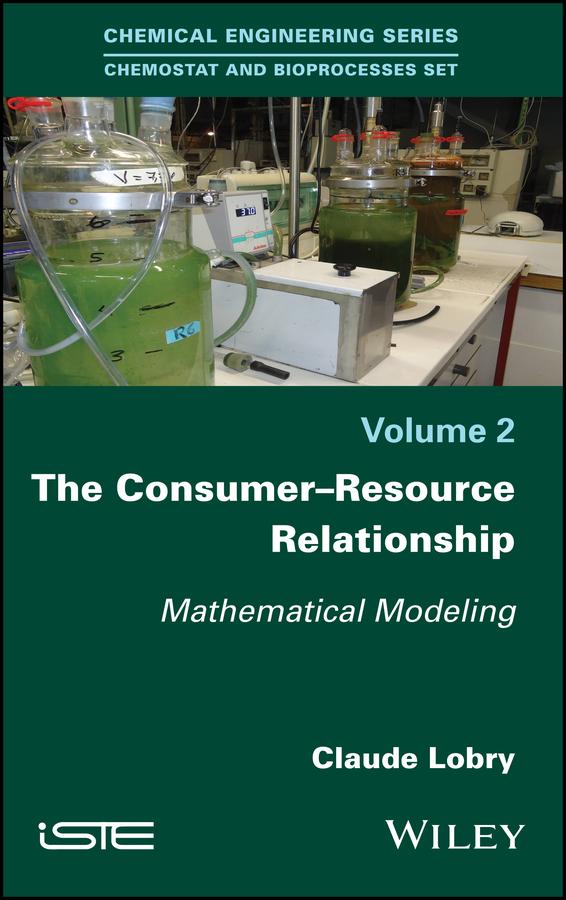
Better known as the "predator-prey relationship," the consumer-resource relationship means the situation where a single species of organisms consumes for survival and reproduction. For example, Escherichia coli consumes glucose, cows consume grass, cheetahs consume baboons; these three very different situations, the first concerns the world of bacteria and the resource is a chemical species, the second concerns mammals and the resource is a plant, and in the final case the consumer and the resource are mammals, have in common the fact of consuming.
In a chemostat, microorganisms generally consume (abiotic) minerals, but not always, bacteriophages consume bacteria that constitute a biotic resource. 'The Chemostat' book dealt only with the case of abiotic resources. Mathematically this amounts to replacing in the two equation system of the chemostat the decreasing function by a general increasing then decreasing function. This simple change has greatly enriched the theory. This book shows in this new framework the problem of competition for the same resource.
Paga fácilmente con tarjeta, Klarna, Apple Pay o Google Pay. ¿No estás contento? Siempre tienes 14 días de garantía de devolución. Lee más en nuestros términos. Si tienes preguntas, escríbenos a hello@memmo.org.
Memmo hace que estudiar sea más fácil, estés donde estés. Aquí tienes tus libros de texto y herramientas de estudio inteligentes en un solo lugar: resúmenes, quizzes, podcasts y flashcards. Y también a Ted, tu compañero de estudio que responde a todo lo que te preguntes. Más de 50 000 estudiantes ya estudian aquí. Está hecho para que aprendas más rápido y te estreses menos.