
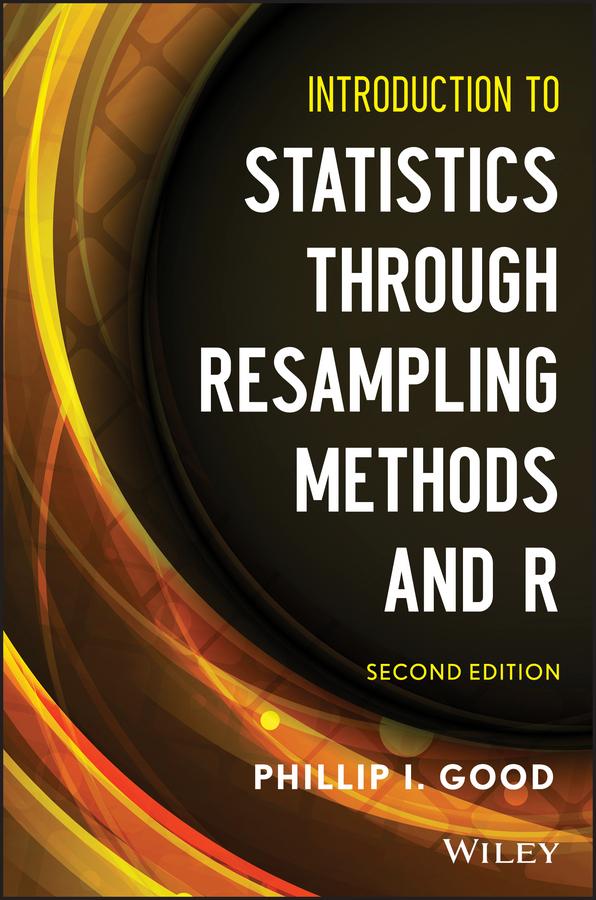
A highly accessible alternative approach to basic statistics Praise for the First Edition: "Certainly one of the most impressive little paperback 200-page introductory statistics books that I will ever see . . . it would make a good nightstand book for every statistician."—Technometrics
Written in a highly accessible style, Introduction to Statistics through Resampling Methods and R, Second Edition guides students in the understanding of descriptive statistics, estimation, hypothesis testing, and model building. The book emphasizes the discovery method, enabling readers to ascertain solutions on their own rather than simply copy answers or apply a formula by rote. The Second Edition utilizes the R programming language to simplify tedious computations, illustrate new concepts, and assist readers in completing exercises. The text facilitates quick learning through the use of:
More than 250 exercises—with selected "hints"—scattered throughout to stimulate readers' thinking and to actively engage them in applying their newfound skills
An increased focus on why a method is introduced
Multiple explanations of basic concepts
Real-life applications in a variety of disciplines
Dozens of thought-provoking, problem-solving questions in the final chapter to assist readers in applying statistics to real-life applications
Introduction to Statistics through Resampling Methods and R, Second Edition is an excellent resource for students and practitioners in the fields of agriculture, astrophysics, bacteriology, biology, botany, business, climatology, clinical trials, economics, education, epidemiology, genetics, geology, growth processes, hospital administration, law, manufacturing, marketing, medicine, mycology, physics, political science, psychology, social welfare, sports, and toxicology who want to master and learn to apply statistical methods.
Written in a highly accessible style, Introduction to Statistics through Resampling Methods and R, Second Edition guides students in the understanding of descriptive statistics, estimation, hypothesis testing, and model building. The book emphasizes the discovery method, enabling readers to ascertain solutions on their own rather than simply copy answers or apply a formula by rote. The Second Edition utilizes the R programming language to simplify tedious computations, illustrate new concepts, and assist readers in completing exercises. The text facilitates quick learning through the use of:
More than 250 exercises—with selected "hints"—scattered throughout to stimulate readers' thinking and to actively engage them in applying their newfound skills
An increased focus on why a method is introduced
Multiple explanations of basic concepts
Real-life applications in a variety of disciplines
Dozens of thought-provoking, problem-solving questions in the final chapter to assist readers in applying statistics to real-life applications
Introduction to Statistics through Resampling Methods and R, Second Edition is an excellent resource for students and practitioners in the fields of agriculture, astrophysics, bacteriology, biology, botany, business, climatology, clinical trials, economics, education, epidemiology, genetics, geology, growth processes, hospital administration, law, manufacturing, marketing, medicine, mycology, physics, political science, psychology, social welfare, sports, and toxicology who want to master and learn to apply statistical methods.
Paga fácilmente con tarjeta, Klarna, Apple Pay o Google Pay. ¿No estás contento? Siempre tienes 14 días de garantía de devolución. Lee más en nuestros términos. Si tienes preguntas, escríbenos a hello@memmo.org.
Memmo hace que estudiar sea más fácil, estés donde estés. Aquí tienes tus libros de texto y herramientas de estudio inteligentes en un solo lugar: resúmenes, quizzes, podcasts y flashcards. Y también a Ted, tu compañero de estudio que responde a todo lo que te preguntes. Más de 50 000 estudiantes ya estudian aquí. Está hecho para que aprendas más rápido y te estreses menos.